We’ve all been there. You walk into a commercial gym, pay a premium, wait twenty minutes for a rack, and spend the next hour under flickering fluorescent lights, breathing in the stale air of a hundred other people’s sweat. You stick to the routine because you think it’s the only way to build muscle.
But have you ever stopped to consider that the most effective training environment might not be a subscription-based facility at all?
For thousands of people, the “perfect” workout has been hiding in plain sight at their local public park. While modern gyms are designed to keep you paying monthly fees, the Park Training movement is designed to keep you actually fit. Here is why it might be time to ditch the keycard and get outdoors.
1. The Cost of Membership
OK, so this is perhaps the most obvious benefit to getting fit outdoors. A standard gym membership in the UK can easily cost you £30 to £60 per month. That is £360 to £720 a year for access to equipment that you could essentially replicate in a public park for zero cost.
Think about what you could do with that extra cash. You could invest it in high-quality home gear, better nutrition, or a few specialised workshops to improve your form. Training in the park isn’t just a lifestyle choice—it’s a massive financial upgrade.
2. Functional Strength vs. “Machine” Strength
Gyms are filled with isolated machines that force your body to move in fixed, unnatural planes. You sit down, push a lever, and let the machine stabilise the weight for you.
Park training is inherently “functional.” When you perform a pull-up, a dip, or a hanging leg raise on outdoor bars, you aren’t just moving weight—you are using your core to stabilise your entire body in space. You are training the muscles you use in real life, improving your balance, coordination, and athletic longevity rather than just inflating your biceps.
3. The Mental Reset (The “Green Exercise” Effect)
Science has coined the term “Green Exercise” to describe physical activity performed in natural environments. Studies consistently show that moving your body in nature—surrounded by trees and sunlight—drastically lowers cortisol levels (the stress hormone) compared to training in an enclosed room.
Training in the park provides a mental reset that a treadmill facing a wall simply cannot replicate. You aren’t just training your muscles; you’re clearing your head. By the time you leave the park, you feel energised rather than drained, setting you up for a better rest of your day.
4. Training in 3D: The Beauty of Bodyweight
In a commercial gym, your progress is often limited by the rack space available. In the park, your training is limited only by your imagination.
Lower Barriers to Entry: No gym bag, no change of clothes, no membership cards, no excuses.
Accessibility: You can train at your own pace, at any time of day, without feeling the pressure of a “crowded hour.”
Progressive Load: You don’t need to add plates to a machine to make a move harder. You simply change your leverage, your angle, or your tempo. It is a smarter, more sophisticated way to train.
The Bottom Line
If you’ve been feeling “stale” in your current fitness routine, it’s not because you aren’t working hard enough; it’s because you’re training in an environment that wasn’t built for your health—it was built for a business model.
Next time you consider heading to the gym, take a detour to the nearest park instead. The air is better, the equipment is free, and the results are real. It’s time to stop paying to train and start training to be free.
Ready to make the switch? Check out our directory to find the best outdoor training spots in your local area.
If you’ve been grinding through high-volume pull-up ladders and explosive plyometrics at your local park, we applaud your grit. But before you chalk up for a third session of the same routine, consider the data: swapping your reliance on sheer willpower for a scientifically-backed power-up can give your progress a healthy fertilising.
Research published in the most prestigious sports medicine journals suggests that supplementing with creatine—a naturally occurring compound that acts as your body’s primary energy currency—can lead to a measurable increase in power output and lean muscle mass, as well as other health benefits such as improved concentration. While your body produces some creatine naturally, “top-up” supplementation ensures your muscles are saturated, essentially flicking an evolutionary switch that allows for faster ATP replenishment. In plain English: it’s the difference between failing on your eighth rep and powering through a ninth or tenth.
Powder, Pills, or Gummies?
You needn’t settle for the gritty, unmixable powders of the past. To find the best creatine for your specific lifestyle, you need to look at how you actually train.
The OG: Micronised Monohydrate Powder If you’re the type to meal-prep with precision, this is your gold standard. It is the most researched iteration of the supplement, offering maximum purity and the best bang for your buck. It’s a seamless addition to a post-park protein shake, providing a foundational boost to muscle volumisation and recovery. Also available in flavourless or flavoured varieties.
The Commuter’s Choiec: Tablets and Capsules For the athlete who heads straight from the office to the outdoor gym, tablets are the ultimate convenience. You can ditch the shaker bottle and the mess; a precise dose can be kept in your gym bag, ready to be deployed whenever the bars are calling. It’s a streamlined approach for those who value efficiency over everything.
The Modern Evolution: Creatine Gummies If you find your supplement routine becoming a chore, gummies are the answer. They offer the same muscle-saturating benefits in a format that feels more like a reward than a requirement. No water, no mixing—just high-performance fuel that tastes like a cheat meal.
Flick the Performance Switch
Cast your net beyond the basic “protein-and-water” approach. Incorporating a high-quality creatine into your regime isn’t just about chasing aesthetics; it’s about optimising your biology for the demands of high-intensity calisthenics.
Whether you’re looking to sharpen your muscle-ups or simply want to recover fast enough to do it all again tomorrow, this is the smartest investment you can make for the price of a weekly coffee. It’s time to stop leaving your potential at the park gate.
Ready to upgrade your output? Pick up our top-rated recommendations below and start seeing the measurable difference in your next session.
To support our free Park Gyms directory, this article contains links which may earn us a small commission at no extra cost to you.All products shown have been researched.
We’ve scoured the booming fitness watch market to bring you (in our opinion), the 5 best fitness watches on the market in 2026.
Everyone can benefit from using a fitness watch, whether your fitness is approached in a casual manner, or professionally. This list provides a suitable choice for everyone.
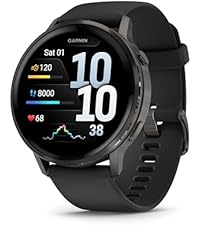
1. Garmin Venu 4
Price bracket: £390-£410
Garmin has become a staple for fitness enthusiasts, and for good reason. Their Venu 4 offers a fantastic balance of high-end athletic data and everyday style, making it a well-rounded option for both tracking a high-intensity session on the bars and wearing to the office. The new “Bio-Sync” sensor is consistently praised for its accuracy during HIIT, avoiding the “lag” that some wrist-based monitors can have. It’s not overly bulky, making it easy to wear while you’re on the move or doing calisthenics.
Pros: Exceptional heart-rate accuracy; stunning AMOLED screen; no monthly subscription required for your data; stainless steel design.
Cons: The touchscreen can be a little fiddly if your hands are sweaty mid-workout.
Apple is a trusted powerhouse in the wearable industry, known for its seamless integration. The Series 11 brings that same trusted quality in a sleek, familiar format. For those who follow guided workouts or use the Apple Fitness+ app, it’s a standout choice, offering a genuinely intuitive experience. It’s a fantastic choice for those looking to keep a close eye on their general health, with its new predictive vitals alerts that can spot a cold before you even feel the symptoms.
Pros: Best-in-class app ecosystem; incredibly smooth interface; reliable ECG and health monitoring.
Cons: Battery requires a daily charge, which might not suit everyone.
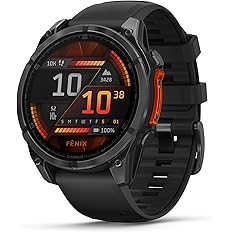
The Fenix 8 is the gold standard for serious athletes who need a watch as tough as their workout. Built to military standards, it’s virtually indestructible—ideal if you’re prone to knocking your watch against metal pull-up bars or outdoor gym equipment. This watch packs incredible battery life into a rugged frame, and the improved solar charging means it can last nearly a month on a single charge. It’s a reliable go-to for those who want the most detailed mapping and recovery data available.
Pros: Incredible durability; massive battery life with solar charging; built-in LED flashlight.
Cons: It’s a larger, heavier watch that might feel a bit bulky on smaller wrists.
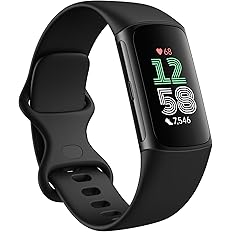
Fitbit has carved out a strong reputation for offering great value without compromising on the essentials. The Charge 6 is a smooth, satisfying option that delivers all the core metrics—like heart rate, steps, and sleep—in a slim, discrete band. It’s often a go-to for those looking for a reliable, everyday fitness boost that’s easy on the wallet, making it a perfect fit for the budget-conscious outdoor fitness enthusiast. Its simplicity is its greatest strength, making it very palatable for those who don’t want a “mini-computer” on their arm.
Pros: Excellent value for money; slim and lightweight design; very user-friendly interface; superb for users whose primary usage is fitness.
Cons: Lacks some of the more advanced features provided by other watches.
The link below includes 6 months’ free premium Fitbit membership, which unlocks some more advanced features.
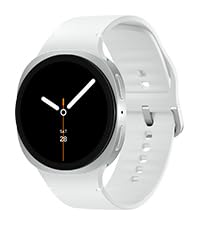
The Galaxy Watch 8 is a brilliant smartwatch first and a serious fitness tool second. For Android users, it offers an unmatched experience, particularly with its “Body Composition” feature which helps you track muscle mass and body fat percentage over time. It’s a clean, refreshing alternative to the more “rugged” looking sports watches. While it’s a powerhouse for health tracking, it remains a stylish option for everyday wear.
Before buying, consider if you actually need built-in GPS. If you always carry your phone while exercising, a cheaper tracker without GPS could save you some pennies.
Let us know which features matter most to you in the comments below!
To support our website, this article contains links which may earn us a small commission at no extra cost to you. All products shown have been researched, and any links to affiliate products do not influence our reviews.Prices listed were accurate at the time of writing.
For many of us, a “rest period” usually involves one of two things: checking our phones or rushing straight into the next set to keep the heart rate up. However, the minutes spent between your pull-ups and dips are just as vital as the reps themselves.
In the world of sports science, this is known as inter-set recovery. This is the window where your body clears out metabolic waste and replenishes the cellular energy (ATP) required for the next effort. Rest too little, and your performance drops; rest too long, and you lose the “stimulus” and time efficiency of your session.
So, how do you find the “sweet spot” for your specific goals? We’ve looked at the latest physiological research to break down the ideal recovery times for park athletes.
Resting for Muscle Growth (Hypertrophy)
If your goal is to build a more muscular physique, the traditional “gold standard” was always a strict two-minute rest. However, recent meta-analyses suggest we might have more flexibility than we thought.
Evidence indicates that 90 seconds (1.5 minutes) may be the optimal threshold for maximising gains. While resting for less than a minute can actually hinder muscle growth by preventing you from hitting enough volume in your subsequent sets, pushing past the three-minute mark doesn’t seem to offer much extra benefit for size.
The Park Gym Rule: If you’re short on time, a slightly shorter rest (around 60-90 seconds) is a great compromise. It keeps the session moving without sacrificing too much growth. A good internal cue is your performance: if you did 10 pull-ups in set one, but can only manage 4 in set two, you haven’t rested long enough. Aim for a drop-off of only 1 or 2 reps.
Ideal Rest: 1.5 – 2 minutes.
Resting for Maximum Strength and Power
When you are working on “Heavy” bodyweight moves—like Muscle-Ups, Front Levers, or Weighted Dips—your nervous system takes a much bigger hit than your muscles do.
Studies consistently show that 3 to 5 minutes of rest is superior for strength gains. This longer window allows the Central Nervous System (CNS) to fully reset, ensuring you can generate the maximal force required for those explosive or highly technical movements.
Even if you aren’t lifting heavy iron, these long rests are essential for high-skill calisthenics. Attempting a difficult skill while neurologically fatigued is a recipe for poor form and plateaus.
If you are training for high-rep challenges or using a circuit-style format to “burn off” the holiday treats, your rest periods should be significantly tighter.
Research into endurance performance suggests that short-interval recovery—ranging from 20 seconds to one minute—is the most effective way to build stamina. By keeping the rest short, you teach your body to perform under the presence of fatigue and improve your “lactate threshold.”
This is the only time where “feeling the burn” and being out of breath is actually part of the intended training stimulus.
Ideal Rest: 20 seconds – 1 minute.
Summary: Listen to Your Body
While the data gives us great benchmarks, the most important variable is individualisation. Factors like the temperature outside, your sleep quality, and the complexity of the exercise all play a role.
For Size: 1-2 minutes.
For Strength: 3-5 minutes.
For Stamina: Under 60 seconds.
Next time you’re at the bars, keep an eye on the clock. Mastering your rest is the easiest way to stop “leaving gains on the table” and start seeing real progress.
How long do you usually wait between sets? Let us know your routine in the comments below.
We are thrilled to announce that Park Gyms has recently been recommended by two of the UK’s most respected publications: The Independent and 220 Triathlon.
As we move into 2026, the “cost of living” is still a huge factor in how people train. These articles highlight that you don’t need an expensive monthly contract to get elite-level fitness results—you just need to know where to look.
What they said about us:
The Independent: In their guide on “How to save on your gym membership,” they recommended us as a key resource for athletes willing to “brave the elements” and find high-quality, free bodyweight equipment in their local area.
220 Triathlon: Named us in their “Free ways to improve your health and fitness in 2026” feature, noting our directory as an easy way to find outdoor gym parks across the UK.
Why this matters
Our mission has always been to make fitness accessible to everyone, regardless of their budget. Being recognised by these major outlets helps our resource reach more people who are looking for free workout environments.
The week between Christmas and the New Year is a strange psychological limbo. We are often caught between the guilt of recent indulgence and the overwhelming pressure of impending resolutions. For many, the desire to “work off” the festive season is fueled more by shame than by genuine motivation.
To truly get back on track, we need to stop fighting our bodies and start understanding our brains. Use these tips below to help navigate the psychological shift from holiday mode back into high gear.
1. Beware the “All-or-Nothing” Trap
The most common psychological pitfall after Christmas is Dichotomous Thinking. This is the belief that you are either “on the wagon” or “off it.” When we feel we’ve “ruined” our progress with a few days of heavy eating, the brain often decides to abandon all discipline until January 1st.
The Fix: Practice the “Volume Dial” approach. Instead of an On/Off switch, think of your healthy habits as a dial. If you can’t turn it up to 10 (an hour-long workout), don’t turn it to 0. Keep it at a 2 or 3 with a ten-minute walk. Consistency beats intensity every time.
2. Leverage the “Fresh Start Effect”
Behavioral scientists have identified a phenomenon called the Fresh Start Effect. We are naturally more motivated at “temporal landmarks”—Mondays, the first of the month, or the end of a holiday. These landmarks allow the brain to relegate past “failures” to a “previous version” of ourselves.
The Fix: Use this psychological clean slate to your advantage. Don’t wait until the New Year is halfway through January. Pick a specific date this week to be your personal “Day One,” and treat it as a hard boundary between the holiday version of you and the current version.
3. Focus on “Addition,” Not “Subtraction”
Post-holiday motivation often centers on restriction: no sugar, no carbs, less sitting. Psychologically, focusing on what we are losing creates a sense of deprivation, which inevitably leads to a “rebound” binge.
The Fix: Reframe your goals through crowding out. Instead of saying “I won’t eat chocolate,” say “I will add two liters of water and a serving of greens to my day.” By focusing on what you are adding, you naturally leave less room—and less mental energy—for the habits you’re trying to reduce.
4. Shorten the Feedback Loop
The reason we find it so easy to eat festive food is that the reward is instant (dopamine). The reason we find it hard to exercise is that the reward (weight loss or fitness) is delayed.
The Fix: Give yourself an immediate “win.” Don’t exercise to lose weight three weeks from now; exercise to feel the immediate “mood lift” or “mental clarity” that comes ten minutes after a walk. When you link the activity to an immediate psychological benefit, your brain is far more likely to want to repeat it.
Summary: Be Kind to Your “Holiday Self”
The most important psychological tool you have is self-compassion. Research consistently shows that people who forgive themselves for “slipping up” return to their healthy habits much faster than those who practice self-criticism.
You didn’t “ruin” anything; you had a season of celebration. Now, it’s simply time to transition back into your groove.
Short on time but ready to build some serious upper body strength? This efficient 20-minute workout is perfect for any outdoor space – your local park, garden, or even your living room – with just a resistance band. Get ready to activate your chest, back, and shoulders for a powerful session.
Duration: 20 minutes
Equipment: Resistance Band (and a sturdy anchor point)
Difficulty: Beginner / Intermediate
Targets: Back, Chest, Shoulders, Arms
Always begin with a 2-3 minute light warm-up (e.g., arm circles, light jogging on the spot) and finish with 2-3 minutes of gentle stretching on the muscles you’ll be working.
The Workout
Perform 3 rounds of the following exercises, aiming for the suggested repetitions. Take a short rest (60-90 seconds) between exercises if needed, and a longer rest (1-2 minutes) between rounds.
1. Resistance Band Bent Over Rows
Stand on the middle of the band with your feet shoulder-width apart. Hinge forward at the hips, keeping your back straight, and pull the band towards your chest, squeezing your shoulder blades together. Slowly return to the start.
Modification: Use a lighter band or decrease the range of motion. For more challenge, use a heavier band or move your hands closer to the middle of the band.
Reps: 12-15 repetitions.
2. Resistance Band Chest Press
Anchor the band to a sturdy object like a wall or door anchor behind you. Stand facing away from the anchor, holding the handles at chest height. Press your hands straight out in front of you, engaging your chest, then return with control.
Modification: If no anchor is available, you can perform push-ups instead. For more challenge, stand further away from the anchor point.
Reps: 12-15 repetitions.
3. Resistance Band Standing Shoulder Press
Stand on the middle of the band with your feet shoulder-width apart. Hold the handles at your shoulders with your palms facing forward. Press your hands straight overhead, then lower them slowly back to your shoulders.
Modification: Use a lighter band. For more challenge, use a heavier band or shorten the band by moving your hands down the handles.
Reps: 10-12 repetitions.
4. Resistance Band Shoulder Front Raises
Stand on the band with your feet shoulder-width apart. Hold the ends of the band and, with straight arms, raise them directly in front of you to shoulder height. Lower with control.
Modification: Use a lighter band or perform with one arm at a time. For more challenge, use a heavier band or move your hands down the band.
Reps: 10-12 repetitions.
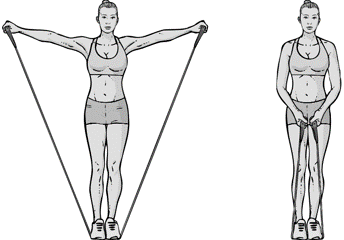
5. Resistance Band Shoulder Lateral Raises
Stand on the band with your feet shoulder-width apart. Holding the ends, raise your straight arms out to the sides until they are parallel with the floor. Lower with control.
Modification: Use a lighter band or perform with one arm at a time. For more challenge, use a heavier band or shorten the band by moving your hands down the band.
That’s your upper body done – well done on completing the workout! Resistance bands are a brilliant way to build strength without heavy weights. We’d love to hear how you got on with this workout, so please share your experience in the comments below.
To support our free Park Gyms directory, this article contains links which may earn us a small commission at no extra cost to you.All products shown have been researched.
Finding a full gym station can be frustrating, but don’t let that derail your fitness journey! Whether you’re at your local Park Gym or simply enjoying the great outdoors, you can still get a fantastic workout without any equipment. Here’s a simple and effective routine perfect for beginners.
Start with a warm-up to get your body ready. Spend 5 to 10 minutes briskly walking or jogging in place. Once you’re warmed up, try this no-equipment workout: 3 sets of 10-15 repetitions of each exercise. First up, bodyweight squats to work those legs and glutes. Next, move on to push-ups (or knee push-ups if you’re just starting out) to strengthen your chest and arms. Follow that with plank holds for 20-30 seconds, building core strength. Finally, finish with lunges to really engage your lower body.
Remember to listen to your body. If you feel fatigued, take breaks between sets as needed. This workout not only saves time but allows you to build strength using your own body weight. Plus, you can easily do it in any park or open space! And don’t worry about doing it perfectly; the key is consistency.
So, the next time the gym is packed, don’t fret! Embrace the outdoors and get your workout done with this no-equipment routine. You’ve got this – and remember, every little bit counts in your fitness journey!
We tasted a wide range of ready to drink protein shakes to save you the work!
After a grueling workout session at your local park gym, or perhaps a challenging home workout, protein is crucial for recovery and muscle growth. But let’s be honest, sometimes whipping up a full, protein-packed meal isn’t practical when you’re on the go, juggling life, or simply don’t have the energy.
That’s where ready-to-drink protein shakes come in to their own. They’re convenient, delicious, and an efficient way to get high-quality protein into your system quickly. Perfect for that post-workout window, or even as a high-protein snack to keep you feeling full between meals. But with so many options lining the supermarket shelves and online stores, how do you choose the best one?
We’ve done the hard work for you, diving into the most popular and affordable protein shakes available in the UK in 2025. We’ve looked at protein content, ingredients, taste, and overall value to bring you our top 5 picks.
For 4 of our 5 recommended picks we’ve also included a link to a multi-buy option, which are usually better value than buying the bottles individually.
Protein Shake Comparison Table
Here’s a quick overview of our top 5 contenders to help you compare at a glance. (Note: Nutritional values are approximate and may vary slightly by flavour and batch. Prices are subject to change.)
Product
Protein (per serving)
Calories (approx.)
Sugar (approx.)
Key Highlight
UFIT High 25g Protein Shake
25g
158 kcal
11g
Balanced macros, great taste
Grenade High Protein Shake
26g
182 kcal
7g
Low sugar, dessert-like flavours
Optimum Nutrition High Protein Shake
50g
244 kcal
20g
Trusted brand, classic flavour
Pro Mlk Protein Shake
25g
206 kcal
20g
Smooth texture, good value
For Goodness Shakes
15g
248 kcal
43g
Recovery focus, higher carbs and sugars
Our Top 5 Best Protein Shakes for 2025
1. UFIT High 25g Protein Shake, Chocolate
UFIT has become a staple in many UK fridges, and for good reason. Their 25g protein shake offers a fantastic balance of protein, carbohydrates, and fats, making it a well-rounded option for both post-workout recovery and a satisfying snack. The chocolate flavour is consistently praised for its smooth, rich taste that avoids the artificial aftertaste some protein drinks can have. It’s not overly thick, making it easy to drink quickly when you’re on the move after a park gym session.
Pros: Excellent taste and texture (smooth, not chalky). Good balance of macros for recovery and satiety. Widely available in supermarkets and online. Reliable protein content.
Cons: Slightly higher in sugar and calories compared to some ultra-low-carb options. Price per shake can add up if bought individually.
Grenade burst onto the scene with their popular protein bars, and their shakes quickly followed suit, living up to the brand’s reputation for bold flavours and serious protein. The Fudge Brownie shake is a standout, offering a genuinely indulgent taste without the high sugar content often found in other “dessert” flavoured options. It’s a fantastic choice for those looking to keep their carb and sugar intake low while still getting a significant protein hit.
Pros: Exceptionally low in sugar. Great for those on a lower-carb diet. Delicious, dessert-like flavours that curb cravings. Good protein content per serving.
Cons: Can be slightly thicker than some other shakes, which might not suit everyone. Some find the sweetness intense due to artificial sweeteners.
Optimum Nutrition is a powerhouse name in the supplement industry, known for its high-quality protein powders. Their ready-to-drink shakes bring that same trusted quality in a convenient format. The Vanilla flavour is a classic for a reason – it’s clean, refreshing, and versatile enough to enjoy on its own or even mixed into a quick smoothie. This shake provides a solid 25g of protein, making it an excellent choice for serious recovery after a tough session at the pull-up bars or a long run.
Pros: Comes from a highly reputable and trusted brand. Clean, classic vanilla flavour that’s not overpowering. Good protein-to-calorie ratio. Reliable for consistent results. Packs a huge 50 grams of protein into a single 500ml bottle.
Cons: Can sometimes be on the pricier side compared to some other options. Flavour range might be less adventurous than some competitors.
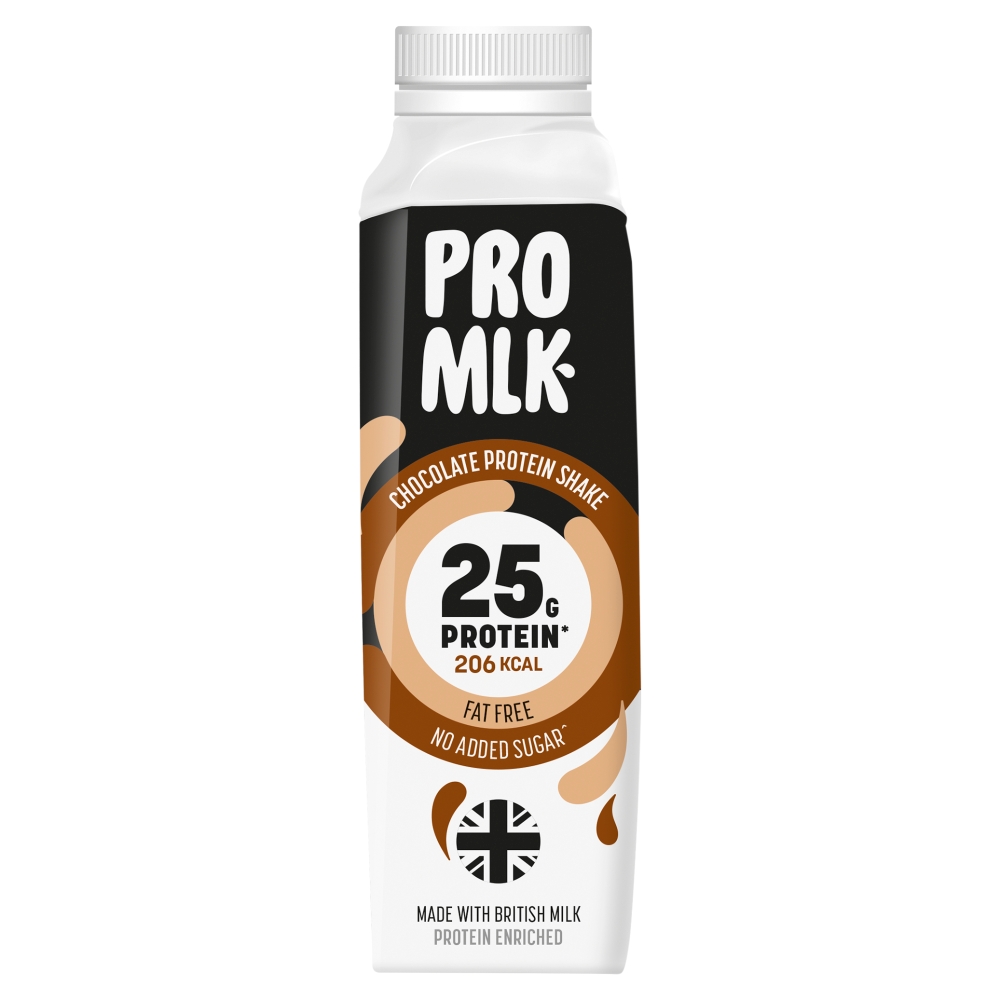
Pro Mlk has carved out a strong reputation for offering great value without compromising on taste or protein content. Their Chocolate protein shake is a smooth, satisfying option that delivers 25g of protein in a convenient bottle. It’s often a go-to for those looking for a reliable, everyday protein boost that’s easy on the wallet, making it a perfect fit for the budget-conscious outdoor fitness enthusiast. Its consistency is often described as similar to regular chocolate milk, making it very palatable.
Pros: Excellent value for money, especially when bought in multipacks. Smooth, easy-to-drink texture. Good, classic chocolate flavour. Reliable protein content.
Cons: May not be as widely available in all local supermarkets as some larger brands. Flavour range can be more limited – with only 3 flavours (chocolate, strawberry, vanilla) currently available.
(Please note: We do not have an affiliate link for this product at this time, but it remains a strong recommendation based on its quality and value.)
5. For Goodness Shakes, Chocolate
For Goodness Shakes has been a long-standing favourite in the UK for recovery, particularly among runners and endurance athletes. While it provides 15g of protein, it also typically includes a higher carbohydrate content, making it an excellent choice for replenishing glycogen stores after longer or more intense workouts – perhaps after a full-body circuit at the park or a challenging run. The chocolate flavour is generally well-received, offering a comforting and familiar taste.
Pros: Higher carbohydrate content ideal for post-endurance recovery. Good taste and widely available. Contains added vitamins and minerals for overall well-being.
Cons: Has a much higher sugar content which might not be suitable for those on strict low-carb diets. Can be slightly more expensive per shake.
Your Buying Guide: Choosing the Best Protein Shake for YOU
With so many great options, how do you pick the perfect protein shake for your needs? Consider these factors before you buy:
1. Protein Content & Source
Most ready-to-drink shakes offer 20-30g of protein per serving, which is a great amount for muscle repair and growth. Check the source – most will be whey or casein (milk-based proteins), which are excellent for muscle synthesis. If you’re plant-based, look for shakes made from pea, soy, or a blend of plant proteins.
2. Calories & Macros (Carbs & Fats)
Your overall diet and goals play a big role here. If you’re aiming for fat loss, you might prefer a lower-calorie, lower-sugar option (like Grenade). If you’ve just completed a long, intense workout (like a long run or a big circuit at the park), a shake with a few more carbs (like For Goodness Shakes) can be beneficial for replenishing energy stores.
3. Sugar Content
While some sugar can be useful post-workout, many prefer to limit it. Check the nutrition label. Many brands use artificial sweeteners to keep sugar low, which is fine for most, but some individuals prefer to avoid them.
4. Taste & Texture
This is highly personal! What one person loves, another might dislike. Look for reviews on taste and texture. Some prefer thicker, milkier shakes, while others want something lighter. Starting with a single bottle before buying a multipack can be a good idea to find your favourite.
5. Price & Value
Ready-to-drink shakes are more expensive than protein powder, but the convenience often justifies the cost. Look for multipacks via the links in this article, as they usually offer much better value per shake.
6. Dietary Needs & Allergens
Always check for allergens like dairy or soy if you have sensitivities. Some brands offer lactose-free or plant-based options.
Final Thoughts
Ready-to-drink protein shakes are a fantastic tool for convenient protein intake. Our top 5 picks offer a range of options to suit different tastes, budgets, and dietary needs. Experiment, find what works for you, and keep fuelling your progress!
To support our website, this article contains links which may earn us a small commission at no extra cost to you. All products shown have been researched, and any links to affiliate products do not influence our reviews.
Should You Have Protein Before or After a Workout?
Protein plays a key role in any workout routine — it’s the foundation for building and repairing muscles, supporting recovery, and fuelling your body for performance. But when it comes to when you consume it, does timing actually make a difference?
Here’s what you need to know about protein timing, how it can support your training, and how to make it work for your goals.
First Things First: Daily Protein Intake Comes First
Before worrying about timing, the most important factor is hitting your daily protein intake. Whether you’re trying to build strength, support recovery, or maintain lean muscle, consistently reaching your daily target matters more than whether you have your shake before or after your session.
You can meet your protein needs through whole foods, and for many people, that’s both the most effective and affordable approach. While some choose to supplement with powders, most people can hit their protein goals affordably using whole foods alone. If you’re looking for practical tips on eating more protein without breaking the bank, check out our guide to budget-friendly protein sources.
So, Does Timing Matter?
While exact timing isn’t critical, there are still benefits to consuming protein around your workouts — especially if you’re training hard or have specific goals like muscle growth or performance.
The sweet spot? Try to eat a protein-rich meal or snack within four to six hours around your workout window. That might mean a meal beforehand and a snack after, or vice versa — whatever works best for your schedule and digestion.
Benefits of Eating Protein Before a Workout
Eating protein 30 to 45 minutes before your workout, ideally with some carbohydrates, can offer several benefits:
Fuel your muscles: Protein supports energy production and muscular endurance, especially during more intense sessions.
Reduce muscle breakdown: Training causes small muscle fibre tears — having protein available can help reduce breakdown and kick-start repair.
Support muscle adaptation: Pre-workout protein may enhance how well your muscles respond and adapt to training.
Feel fuller and more focused: A protein-rich snack can help prevent hunger pangs mid-session and keep your energy levels steady.
Good options include Greek yoghurt with oats, eggs on toast, or a light protein smoothie if you’re short on time.
Benefits of Eating Protein After a Workout
Post-workout protein helps kick-start recovery. Aim to eat within 30 to 60 minutes if possible, though research shows this window is flexible.
Benefits include:
Muscle repair and growth: Protein helps rebuild muscle fibres that are broken down during training.
Less soreness and inflammation: Protein supports recovery and may help reduce inflammation that leads to delayed-onset muscle soreness.
Replenish energy: A post-workout protein snack or meal can restore energy and support hydration.
Support lean muscle gains: Regular post-training protein helps maintain and build lean mass over time.
Quick post-workout options: eggs and wholegrain toast, a chicken wrap, or cottage cheese with fruit.
Protein for Different Workout Types
Your needs can also vary depending on the intensity of your workouts:
High-intensity training (like CrossFit, HIIT, or endurance running): Eat a mix of carbs and protein before and after training for best performance and recovery.
Lower-intensity sessions (like yoga, walking, or bodyweight workouts): You may not need a specific protein shake — just ensure your usual meals include enough protein.
Daily Protein Goals and How to Hit Them
Most people benefit from 1.1 to 1.5 grams of protein per kilogram of bodyweight per day, especially if they’re active. That’s higher than the general minimum of 0.75g/kg/day often recommended.
To make it easier:
Aim for 20–40g of protein per meal, spread over 3–5 meals/snacks per day.
Don’t forget carbs — a general ratio of 3:1 (carbs:protein) supports recovery. If you’re aiming for fat loss, a 2:1 ratio may be more appropriate.
Protein powders can be helpful for convenience, especially around workouts. Whey protein is known for muscle-building support and anti-inflammatory benefits. Plant-based options like pea, hemp, or rice protein are great for vegan diets. Still, for most people, protein needs can be met with everyday food choices.
Whether you prefer fuelling up before or after a workout, the bottom line is simple: prioritise hitting your daily protein goals consistently. Find a timing routine that suits your lifestyle, supports your training, and keeps your nutrition simple and effective.