Blog

  • Build Your Own Home Gym: Affordable & Effective Setups

    For many of us, the idea of getting fit often conjures images of busy gyms or specific fitness classes. But what if your most convenient and consistent workout space was just a few steps away? Building a home gym might sound daunting or expensive, but as someone who started with just a couple of dumbbells and a coffee table, I can tell you it’s incredibly achievable.

    My own journey into fitness didn’t begin with a grand plan. Seven years ago, it started in my living room with a simple pair of £20 Argos dumbbells and our coffee table serving as a makeshift bench. It was a humble start, but it taught me that dedication matters far more than designer equipment. Over time, as my commitment grew, so did my collection of gear.

    Making the Most of Every Inch

    One of the biggest hurdles for a home gym is often space. Early on, I quickly learned to optimise. Instead of bulky freestanding racks, I opted for a pull-up bar that fits neatly across a door frame and can be removed when not in use. Small additions, like hooks on the wall for hanging resistance bands, kept things tidy and accessible without cluttering the floor. It’s all about being clever with what you have.

    Smart Equipment Choices That Grow With You

    Beyond those initial dumbbells, my home gym evolved with purpose. The next additions were vital: versatile resistance bands, a kettlebell for dynamic movements, and even a spin bike for cardio sessions. Essentials like a yoga mat provided comfort, and some padded floor tiles made the space more inviting for floor exercises. Little things make a big difference – a workout diary to track progress, a good pair of workout gloves for grip, and a tablet holder to easily follow along with routines were all invaluable.

    Crafting Your Inspiring Space

    A home gym isn’t just about the equipment; it’s about the environment. For me, adding a full-length mirror became crucial. It wasn’t about vanity; it allowed me to review my form, ensure I was moving safely, and see the gradual progress in my body shape, which was a huge motivator. Creating a clean, dedicated zone, even a small one, signals to your mind that it’s time to focus.

    Overcoming Obstacles with Clever Solutions

    Even with a growing collection, challenges arose. I found I didn’t have room for a dedicated machine for ‘pull’ exercises. The solution came in the form of tube resistance bands with a door anchor and various attachments, allowing me to create high or low anchor points for a full range of pulling movements. And for those times I was away from home, travel-friendly kit like a Powerball for grip strength, and my ever-present resistance bands meant consistency was never truly broken.

    Related article: Best affordable resistance bands for different workouts

    Building on a Budget: My Top Tips

    You truly don’t need to break the bank. My best advice for keeping costs down includes:

    • Adjustable Dumbbells: Adjustable dumbells are far cheaper than buying multiple sets of fixed-weight dumbbells, they save money and space.
    • Improvise with Household Items: Chairs or sturdy stools can easily substitute for benches or steps in many exercises.
    • Embrace Bodyweight: Calisthenics and bodyweight exercises are incredibly effective and require no equipment at all, making them the ultimate budget-friendly foundation.

    Building a home gym is a personal journey, just like any fitness endeavour. It’s about creating a space that works for you, fits your life, and empowers you to move, strengthen, and feel amazing. Combined with the fantastic resources of your local outdoor gyms, you have a truly unbeatable setup for your fitness goals.


    To support our free Park Gyms directory, this article contains links which may earn us a small commission at no extra cost to you. All products shown have been researched.

  • Decoding ‘HIIT’: Why You’ll Love High-Intensity Interval Training in the Park

    If you’re new to the world of fitness, you might have come across the term ‘HIIT’ and wondered what on earth it means. Well, you’re not alone! HIIT stands for High-Intensity Interval Training, and it’s become a buzzword in the fitness community, especially in the great outdoors.

    So, what exactly is HIIT? Essentially, it’s a training method that alternates between short bursts of intense exercise and brief recovery periods. For instance, imagine sprinting for 30 seconds in your local park, followed by a minute of walking. You push yourself hard during the sprints, and then allow your body to recover, only to do it all over again. This approach not only saves time but also helps torch calories and build endurance.

    Let me share a quick personal story. The other day, I was at my favourite park gym, and I decided to try a HIIT session. I combined bodyweight exercises like burpees and squat jumps with short runs between various pieces of equipment. After just 20 minutes, I was pleasantly surprised at how effective it was! I felt energized and accomplished without spending hours at the gym.

    Now, you might think, “Isn’t HIIT just for seasoned athletes?” Not at all – It’s perfect for all fitness levels. You can adjust the intensity and duration to suit your capabilities. If you’re just starting, maybe aim for 20 seconds of work followed by 40 seconds of rest. Remember, the goal is to challenge yourself while having fun with outdoor training.

    So, why not give HIIT a try at your local park gym? It’s a fantastic way to get fit and enjoy the fresh air. And remember, every little effort counts, so don’t hesitate to start small!

  • 20-Minute Leg & Core Builder (Bench)

    Ready to strengthen your lower body and build a resilient core? This dynamic 20-minute workout is ideal for any outdoor space, utilising just a park bench and some open ground. It’s designed to enhance your stability, power, and overall functional fitness.

    • Duration: 20 minutes
    • Equipment: Bench (or sturdy step), Open Space
    • Difficulty: Beginner / Intermediate
    • Targets: Lower Body, Glutes, Hamstrings, Quadriceps, Core, Lower Back

    Always begin with a 2-3 minute light warm-up (e.g., leg swings, gentle marching) and finish with 2-3 minutes of gentle stretching on the muscles you’ll be working.

    The Workout

    Perform 3-4 rounds of the following exercises. Take a short rest (60-90 seconds) between exercises if needed, and a longer rest (1-2 minutes) between rounds.


    1. Step-Ups (on Bench)

    Place your entire foot on the bench, drive up through your heel to stand tall, then step down with control. Alternate legs.

    Modification: Use a lower step or perform on flat ground for a simpler version. For more challenge, hold a heavy object or wear a rucksack.

    Reps: 10-15 repetitions per leg.


    2. Walking Lunges

    Take a controlled step forward, lowering your back knee towards the ground until both knees are at roughly 90 degrees. Push off your front foot to step into the next lunge.

    Modification: Perform static lunges (staying in place) if space is limited or for stability. For more challenge, hold a heavy object or wear a rucksack.

    Reps: 10-12 repetitions per leg.


    3. Plank (Standard or Variations)

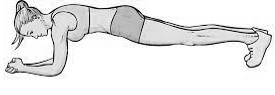
    Position yourself on your forearms and toes, maintaining a straight, rigid line from head to heels. Engage your core tightly.

    plank

    Modification: Perform on your knees for less intensity. For more challenge, try side planks or planks with alternating leg lifts.

    Duration: Hold for 30-45 seconds.


    4. Glute Bridges

    Lie on your back with knees bent, feet flat on the ground. Drive through your heels to lift your hips towards the ceiling, squeezing your glutes at the top.

    Modification: Perform with one leg extended for a unilateral challenge. For more challenge, place a resistance band around your knees.

    Reps: 15-20 repetitions.


    5. Box Jumps (or Bench Step-Ups)

    Stand in front of a sturdy bench or low step. Explode upwards to land softly on the bench, then step or jump back down. If jumping is not suitable, perform powerful bench step-ups.

    Modification: If jumping is challenging, perform dynamic step-ups where you step up quickly. For more challenge, find a higher, stable surface (ensure safety).

    Reps: 8-12 repetitions.


    Well done on completing the workout – you’ve definitely earned a well-deserved drink! We’re always keen to hear your thoughts and experiences, so please do let us know how you found this session in the comments below.

  • 15-Minute Upper Body Power Workout (Pull-up Bar & Bench)

    Looking to boost your upper body strength and feel more powerful? This efficient 15-minute routine is perfect for outdoor gyms, making excellent use of common equipment like a pull-up bar and bench. It’s designed to give your chest, back, and arms a focused workout.

    • Duration: 15 minutes
    • Equipment: Pull-up Bar, Bench (or sturdy ledge)
    • Difficulty: Beginner / Intermediate
    • Targets: Upper Body, Chest, Back, Arms, Shoulders, Core

    Always begin with a 2-3 minute light warm-up (e.g., arm circles, light jogging) and finish with 2-3 minutes of gentle stretching on the muscles you’ll be working.

    The Workout

    Perform 3 rounds of the following exercises, aiming for the suggested repetitions. Take a short rest (60-90 seconds) between exercises if needed, and a longer rest (1-2 minutes) between rounds.


    1. Pull-ups

    Focus on pulling your chest towards the bar, engaging your back muscles.

    Modification: If full pull-ups are challenging, use assisted pull-up equipment if available, perform jump assists (jump up and slowly lower down), or focus on controlled negatives (slowly lowering from the top position).

    Reps: Aim for 6-10 repetitions (or as many controlled reps as possible).


    2. Bench Dips

    Keep your hips close to the bench as you lower your body, aiming for arms at a 90-degree angle.

    Modification: For an easier version, keep your legs bent. For more challenge, extend your legs fully.

    Reps: 10-15 repetitions.


    3. Incline Push-ups (on Bench)

    Place your hands wider than your shoulders on the bench, maintaining a straight body line from head to heels as you push up.

    Modification: If the bench is too low, use a higher surface or stand further away from the bench for an easier angle.

    Reps: 10-15 repetitions.


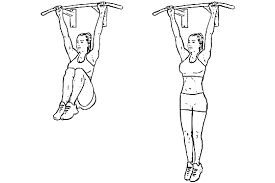
    4. Hanging Knee Raises

    Hang from the pull-up bar, engaging your core to lift your knees towards your chest, then control the descent.

    Modification: If hanging knee raises are too difficult, simply hang from the bar for as long as possible to build grip strength, or perform standard leg raises on the floor.

    Reps: 10-15 repetitions.


    Well done on completing the workout – you’ve definitely earned a well-deserved drink! We’re always keen to hear your thoughts and experiences, so please do let us know how you found this session in the comments below.

  • 10-Minute Full Body Blast (No Equipment)

    Short on time but ready for a full-body burst? This efficient 10-minute routine is perfect for any outdoor space – your local park, garden, or even your living room – with no equipment needed. Get ready to activate every major muscle group.

    • Duration: 10 minutes
    • Equipment: None
    • Difficulty: Beginner
    • Targets: Legs, Chest, Shoulders, Arms, Core

    Always begin with a 2-3 minute light warm-up (jogging on the spot + arm circles) and finish with 2-3 minutes of gentle stretching on the muscles you’ll be working.

    The Workout

    For each exercise: 45 seconds work, 15 seconds rest, for 2 rounds.


    Squats

    Keep chest up, push hips back as if sitting in a chair.


    Push-ups

    Maintain a straight line from head to heels.

    Modification: Perform on knees if required.


    Plank

    Engage core tightly, keep body rigid.

    plank

    Modification: Perform on knees if required.


    Lunge

    Step forward, lower until both knees are at 90 degrees.


    Jumping Jacks

    Full range of motion, controlled landing.


    Now grab a drink, you’ve earned it! We’d love to hear how you got on with this workout, so please share your experience in the comments below.

  • How Many Push-Ups You Really Need to Build Muscle

    Push-ups are one of the most effective, versatile bodyweight exercises you can do — and they require no equipment. Whether you’re working out in your local park gym, at home, or anywhere else with a bit of floor space, push-ups can help you build serious upper-body strength.

    They primarily target the chest, shoulders, and triceps, but they also hit the core and glutes when done correctly. So the real question is: how many push-ups do you need to do to see muscle gains?

    So, Can Push-Ups Really Build Muscle?

    The short answer is, Yes. The key is how you do them and how much effort you put in.

    To start building noticeable muscle, most people should aim to complete 3 sets of 25 to 30 push-ups with excellent form. That means going all the way down, pausing briefly at the bottom, pushing back up until your arms are fully extended, and avoiding momentum or sloppy reps. This controlled pace creates the kind of muscle tension that triggers growth.

    If you’re cranking out sets of 50+ without breaking a sweat, it’s probably not building much muscle anymore — you’re doing cardio at that point. Quality matters more than quantity.

    Push-Up Form: Keep It Clean

    Push-ups are simple, but easy to mess up. If your form breaks down, you’re wasting reps and increasing the risk of injury. Here’s how to get the most out of every set:

    1. Start in a high plank: Hands flat on the ground, directly below your shoulders. Body in a straight line from head to heels.
    2. Engage your body: Squeeze your glutes and brace your core — this stabilizes your spine.
    3. Lower under control: Drop down until your chest is about an inch from the floor. Elbows should point roughly 45 degrees from your sides.
    4. Push back up: Extend fully at the top without locking out aggressively.

    Every rep should feel like work — if it’s too easy, you’re either rushing or not going deep enough.

    What If You Can’t Do 25 Yet?

    No problem. Building muscle is about progressive overload — pushing your muscles a bit further each time. Even if you’re only getting 8, 10, or 15 reps per set right now, you can still build muscle as long as you push close to failure with good form.

    Avoid the temptation to “cheat” through extra reps with sloppy form. Stop your set once your body starts compensating — hips sagging, rep depth shortening, or head bobbing. You’ll get better results from 12 clean push-ups than 25 half-reps.

    Stick with it, and you’ll be hitting higher rep sets faster than you think.

    How to Keep Progressing

    Once you can knock out 3 sets of 25 or more push-ups with great form, it’s time to make things harder. More reps won’t necessarily equal more muscle at that point. Here’s how to increase the challenge:

    • Add resistance: Use a weighted vest or place a plate on your upper back (make sure it’s centered and secure).
    • Slow the tempo: Lower slowly (3–4 seconds), pause at the bottom, then push up powerfully.
    • Try advanced variations: Diamond push-ups, archer push-ups, or elevated feet push-ups will hit your muscles differently.

    The key is constantly finding new ways to stress your muscles.


    Ready to Take Your Push-Ups to the Next Level?

    Try our recommended picks to maximise those gains and ensure no push-up is wasted. We research good-value products to ensure you don’t break the bank.

    This weighted vest also comes with dual storage pockets to keep your keys and phone safe whilst you work out.

    parallettes

    These hardwearing parallettes are made of beech wood and come in a choice of two sizes.


  • Busting the Myth: You Don’t Need a Gym to Get Fit

    Introduction

    As someone who loves the great outdoors and the fitness community it nurtures, I often hear a common myth that can be quite disheartening: "You need a gym membership to get fit." Let me tell you, that couldn’t be further from the truth! As a fan of the UK’s beautiful parks, I’ve discovered that outdoor gyms are a fantastic alternative.

    Outdoor Gyms: The Hidden Gem

    In cities across the UK, parks like Hyde Park in London or Platt Fields Park in Manchester have embraced outdoor fitness. With equipment like pull-up bars, resistance machines, and even group classes, these venues provide ample opportunity to break a sweat. Personally, I love the feeling of fresh air while exercising in the sun. Not only does it boost my mood, but it also fosters a sense of community as I often bump into fellow fitness enthusiasts.

    Practical Advice for Getting Started

    If you’re keen to kickstart your fitness journey outdoors, here’s my practical advice: start with simple bodyweight exercises like push-ups, squats, and lunges. You can easily find a sturdy bench for tricep dips or a flat area for a quick HIIT workout. Plus, make sure to check your local parks for outdoor gym facilities and classes; they’re often free or very low-cost!

    Conclusion

    So, let’s debunk this myth: outdoor exercise is not only possible, but it can also be incredibly rewarding. I encourage you to step outside, find your nearest park gym, and give it a go. You might just find it’s more enjoyable than you ever imagined. Remember, fitness can happen anywhere, so embrace the outdoors!

  • Understanding Progressive Overload: Your Key to Strength Training Success

    What is Progressive Overload?

    As a beginner stepping into the world of strength training, one concept you’ll hear about often is progressive overload. It’s a fundamental principle that involves gradually increasing the amount of stress placed on your muscles to promote growth and strength over time. Imagine you’re at your local park gym, using the outdoor pull-up bars. If you can comfortably do five pull-ups, the goal is not to stop there but to gradually increase the challenge.

    How to Apply It in Park Gyms

    When I first started using the outdoor gym equipment at my local park, I focused on bodyweight exercises. I began with the basics: push-ups, squats, and dips. After a few weeks, I noticed I could do more repetitions or hold the positions for longer. That’s where progressive overload comes in. You can add more sets or try variations like incline push-ups on a bench to make it more challenging. Alternatively, consider incorporating weights or resistance bands as you progress.

    Practical Tips for Beginners

    First, keep track of your workouts. Note how many reps and sets you’re doing each session. This simple act will motivate you to push a little harder each week. Additionally, listen to your body; when an exercise becomes too easy, it’s a clear sign to step it up. At the park gym, you can easily modify your routine by using different equipment or changing the angle of your body.

    Final Thoughts

    Remember, strength training isn’t about lifting the heaviest weights right away; it’s about consistent progress. Embrace progressive overload, and you’ll build strength more effectively while enjoying the great outdoors. So next time you’re at the park gym, challenge yourself a bit more—your future self will thank you!

  • Get Stronger Outdoors: Your Push Day Workout

    Welcome to Your Outdoor Push Day!

    Living in the UK, I’ve discovered that outdoor workouts can be just as effective as those in the gym. Today, I want to share my go-to push day routine that focuses on dips, push-ups, and overhead presses. You can do this at your local park gym or even in your garden. Trust me, fresh air makes a world of difference!

    Workout Breakdown

    Start with some dynamic stretches to warm up. I usually do arm circles and shoulder rolls to get my upper body ready. Then, let’s jump into the workout:

    • Dips: Find parallel bars or sturdy benches. Aim for 3 sets of 8-12 reps. If you’re new to dips, just focus on your bodyweight. As you progress, you can add resistance bands for extra challenge.
    • Push-Ups: Next, we hit the ground with push-ups. I often switch between standard and incline push-ups using benches. Aim for 3 sets of 10-15 reps. If you’re struggling, feel free to drop to your knees.
    • Overhead Press: Use a resistance band anchored under your feet. Stand tall and press overhead for 3 sets of 10-12 reps. This is a great way to build shoulder strength without heavy weights.

    Final Thoughts

    Outdoor workouts can truly be a game changer. I love the feeling of the sun on my skin and the sounds of nature around me. Remember, consistency is key! Don’t hesitate to adjust the reps and sets to match your fitness level. You’ve got this, and I can’t wait for you to enjoy outdoor fitness as much as I do!

  • Leg Burner Workout: Step-Ups, Jumps, and Hill Sprints

    Get Ready to Feel the Burn

    When it comes to outdoor workouts, nothing quite beats the fresh air of the UK parks. One of my go-to routines for a serious leg burn involves step-ups, jumps, and hill sprints. Not only does this workout engage your entire lower body, but it also gives your cardiovascular system a solid challenge. So, grab your water bottle and let’s dive into this leg burner!

    Step-Ups to Start Strong

    Find a sturdy park bench or a set of steps for your first exercise: step-ups. Stand facing the bench, placing one foot firmly on the surface. Engage your core and push through your heel to lift your body up, allowing the other leg to follow. Keep your back straight and avoid leaning forward. Aim for 3 sets of 10-15 reps on each leg. This not only builds strength but also improves your balance.

    Jump Higher with Box Jumps

    Next, let’s add some power with box jumps. Stand a few feet back from the bench and jump onto it with both feet, landing softly with your knees slightly bent. Ensure your feet are hip-width apart when you land to maintain stability. Start with 3 sets of 8-10 jumps, and remember to focus on your form to avoid injuries.

    Finish Strong with Hill Sprints

    Lastly, find a hill in your local park. Sprinting uphill will really fire up those leg muscles! Aim for 5-10 sprints, allowing a minute of rest between each to recover. Focus on driving your knees up and pumping your arms as you sprint. It’s a tough but rewarding way to finish your workout.

    Wrap-Up

    So there you have it, a quick and effective leg burner workout you can do in any park. Remember to listen to your body, adjust the intensity as needed, and most importantly, enjoy the beautiful outdoors. Let’s get those legs moving!