If you’re new to the world of fitness, you might have come across the term ‘HIIT’ and wondered what on earth it means. Well, you’re not alone! HIIT stands for High-Intensity Interval Training, and it’s become a buzzword in the fitness community, especially in the great outdoors.
So, what exactly is HIIT? Essentially, it’s a training method that alternates between short bursts of intense exercise and brief recovery periods. For instance, imagine sprinting for 30 seconds in your local park, followed by a minute of walking. You push yourself hard during the sprints, and then allow your body to recover, only to do it all over again. This approach not only saves time but also helps torch calories and build endurance.
Let me share a quick personal story. The other day, I was at my favourite park gym, and I decided to try a HIIT session. I combined bodyweight exercises like burpees and squat jumps with short runs between various pieces of equipment. After just 20 minutes, I was pleasantly surprised at how effective it was! I felt energized and accomplished without spending hours at the gym.
Now, you might think, “Isn’t HIIT just for seasoned athletes?” Not at all – It’s perfect for all fitness levels. You can adjust the intensity and duration to suit your capabilities. If you’re just starting, maybe aim for 20 seconds of work followed by 40 seconds of rest. Remember, the goal is to challenge yourself while having fun with outdoor training.
So, why not give HIIT a try at your local park gym? It’s a fantastic way to get fit and enjoy the fresh air. And remember, every little effort counts, so don’t hesitate to start small!
Ready to strengthen your lower body and build a resilient core? This dynamic 20-minute workout is ideal for any outdoor space, utilising just a park bench and some open ground. It’s designed to enhance your stability, power, and overall functional fitness.
Duration: 20 minutes
Equipment: Bench (or sturdy step), Open Space
Difficulty: Beginner / Intermediate
Targets: Lower Body, Glutes, Hamstrings, Quadriceps, Core, Lower Back
Always begin with a 2-3 minute light warm-up (e.g., leg swings, gentle marching) and finish with 2-3 minutes of gentle stretching on the muscles you’ll be working.
The Workout
Perform 3-4 rounds of the following exercises. Take a short rest (60-90 seconds) between exercises if needed, and a longer rest (1-2 minutes) between rounds.
1. Step-Ups (on Bench)
Place your entire foot on the bench, drive up through your heel to stand tall, then step down with control. Alternate legs.
Modification: Use a lower step or perform on flat ground for a simpler version. For more challenge, hold a heavy object or wear a rucksack.
Reps: 10-15 repetitions per leg.
2. Walking Lunges
Take a controlled step forward, lowering your back knee towards the ground until both knees are at roughly 90 degrees. Push off your front foot to step into the next lunge.
Modification: Perform static lunges (staying in place) if space is limited or for stability. For more challenge, hold a heavy object or wear a rucksack.
Reps: 10-12 repetitions per leg.
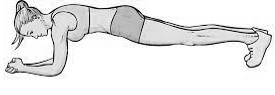
3. Plank (Standard or Variations)
Position yourself on your forearms and toes, maintaining a straight, rigid line from head to heels. Engage your core tightly.
Modification: Perform on your knees for less intensity. For more challenge, try side planks or planks with alternating leg lifts.
Duration: Hold for 30-45 seconds.
4. Glute Bridges
Lie on your back with knees bent, feet flat on the ground. Drive through your heels to lift your hips towards the ceiling, squeezing your glutes at the top.
Modification: Perform with one leg extended for a unilateral challenge. For more challenge, place a resistance band around your knees.
Reps: 15-20 repetitions.
5. Box Jumps (or Bench Step-Ups)
Stand in front of a sturdy bench or low step. Explode upwards to land softly on the bench, then step or jump back down. If jumping is not suitable, perform powerful bench step-ups.
Modification: If jumping is challenging, perform dynamic step-ups where you step up quickly. For more challenge, find a higher, stable surface (ensure safety).
Reps: 8-12 repetitions.
Well done on completing the workout – you’ve definitely earned a well-deserved drink! We’re always keen to hear your thoughts and experiences, so please do let us know how you found this session in the comments below.
Push-ups are one of the most effective, versatile bodyweight exercises you can do — and they require no equipment. Whether you’re working out in your local park gym, at home, or anywhere else with a bit of floor space, push-ups can help you build serious upper-body strength.
They primarily target the chest, shoulders, and triceps, but they also hit the core and glutes when done correctly. So the real question is: how many push-ups do you need to do to see muscle gains?
So, Can Push-Ups Really Build Muscle?
The short answer is, Yes. The key is how you do them and how much effort you put in.
To start building noticeable muscle, most people should aim to complete 3 sets of 25 to 30 push-ups with excellent form. That means going all the way down, pausing briefly at the bottom, pushing back up until your arms are fully extended, and avoiding momentum or sloppy reps. This controlled pace creates the kind of muscle tension that triggers growth.
If you’re cranking out sets of 50+ without breaking a sweat, it’s probably not building much muscle anymore — you’re doing cardio at that point. Quality matters more than quantity.
Push-Up Form: Keep It Clean
Push-ups are simple, but easy to mess up. If your form breaks down, you’re wasting reps and increasing the risk of injury. Here’s how to get the most out of every set:
Start in a high plank: Hands flat on the ground, directly below your shoulders. Body in a straight line from head to heels.
Engage your body: Squeeze your glutes and brace your core — this stabilizes your spine.
Lower under control: Drop down until your chest is about an inch from the floor. Elbows should point roughly 45 degrees from your sides.
Push back up: Extend fully at the top without locking out aggressively.
Every rep should feel like work — if it’s too easy, you’re either rushing or not going deep enough.
What If You Can’t Do 25 Yet?
No problem. Building muscle is about progressive overload — pushing your muscles a bit further each time. Even if you’re only getting 8, 10, or 15 reps per set right now, you can still build muscle as long as you push close to failure with good form.
Avoid the temptation to “cheat” through extra reps with sloppy form. Stop your set once your body starts compensating — hips sagging, rep depth shortening, or head bobbing. You’ll get better results from 12 clean push-ups than 25 half-reps.
Stick with it, and you’ll be hitting higher rep sets faster than you think.
How to Keep Progressing
Once you can knock out 3 sets of 25 or more push-ups with great form, it’s time to make things harder. More reps won’t necessarily equal more muscle at that point. Here’s how to increase the challenge:
Add resistance: Use a weighted vest or place a plate on your upper back (make sure it’s centered and secure).
Slow the tempo: Lower slowly (3–4 seconds), pause at the bottom, then push up powerfully.
Try advanced variations: Diamond push-ups, archer push-ups, or elevated feet push-ups will hit your muscles differently.
The key is constantly finding new ways to stress your muscles.
Ready to Take Your Push-Ups to the Next Level?
Try our recommended picks to maximise those gains and ensure no push-up is wasted. We research good-value products to ensure you don’t break the bank.
This weighted vest also comes with dual storage pockets to keep your keys and phone safe whilst you work out.
To support our free Park Gyms directory, this article contains links which may earn us a small commission at no extra cost to you.All products shown have been researched.
Park Gyms is pleased to announce the inclusion of a new outdoor fitness facility in its directory. The Wolsingham Outdoor Gym in County Durham is now our 505th listed outdoor gym, offering residents and visitors a dedicated space for outdoor workouts.
This facility is located in the charming village of Wolsingham, County Durham, providing an accessible option for those seeking outdoor fitness opportunities in the area.
The Wolsingham Outdoor Gym features a comprehensive selection of equipment designed to facilitate a full-body workout. Users can utilise an ab toner, leg press, and hydraulic squat for lower body development, alongside a shoulder press and arm curl for upper body exercises. A leg extension machine is also available for specific quadriceps work.
For cardiovascular training, the gym includes a stepper and an exercise bike. Additionally, equipment for bodyweight exercises such as a triceps press, pull-up bars, dips, and parallel bars are provided.
What’s more, the outdoor gym equipment is situated directly in front of the children’s park, making it a superb resource for parents looking to fit in a quick workout while the kids play.
There’s even a trailer with refreshments situated next to the gym for those needing to replenish their energy levels.
There’s something at this location for everyone.
To find outdoor gyms in your area, click the button below.
As a fitness enthusiast, I’ve always believed in the power of outdoor workouts. There’s something invigorating about breaking a sweat in nature, surrounded by fresh air and greenery. If you’re looking to get fit without the constraints of a gym, park gym equipment is a fantastic way to structure a progressive workout plan that suits your needs.
Understanding Progression
Progression is all about gradually increasing the intensity of your workouts to keep challenging your body. Start by assessing your current fitness level. For example, when I first began using outdoor gym equipment, I focused on mastering basic movements like push-ups and squats. I aimed for 3 sets of 10 reps, ensuring I maintained proper form. Once this felt manageable, I increased the reps or added additional sets to boost my strength.
Creating Your Plan
To structure your workout, I recommend a mix of strength, cardio, and flexibility. For strength, utilize equipment like pull-up bars, dip stations, and benches. Start with bodyweight exercises and gradually incorporate resistance through more advanced variations. On cardio days, I suggest using park trails for interval sprints or hill runs, which I’ve found to be exhilarating. Don’t forget to include stretching routines to improve flexibility and prevent injuries.
Conclusion
Outdoor workouts are not just about the exercises; they’re about embracing the environment. I’ve met some amazing people while working out in local parks, and it’s a great way to stay motivated. Remember to track your progress and adjust your plan regularly to keep it fresh and challenging.
Well, the forecast is in, and it looks like we’re in for a proper UK heatwave this week. For those of us who love getting active outdoors, it presents a bit of a challenge. I know the feeling – the sun’s out, the park’s inviting, and you just want to get your session in. But when temperatures soar, it’s absolutely crucial to adjust your routine and take extra care. Our brilliant outdoor gyms are fantastic, but we need to use them wisely when the mercury rises.
First and foremost, hydration is your absolute best friend. Seriously, make that water bottle your constant companion. It’s not just about sipping during your workout; aim to drink plenty of water throughout the day, both before and after your session. When you’re sweating more than usual, your body loses vital fluids and electrolytes, so replenishing them is key to avoiding feeling sluggish or worse.
Next up, timing is everything. Those scorching midday hours, typically between 11 AM and 3 PM, are best avoided for intense exercise. I often find myself getting out for an early morning session when the air is still crisp, or waiting until the late evening when things have cooled down a bit. You’ll not only feel more comfortable, but you’ll also reduce your risk of overheating.
Finally, listen to your body – it’s always right. This isn’t the week to push for new personal bests or try to match your usual intensity. Shorten your workouts, take more frequent breaks in the shade, and don’t hesitate to reduce the number of sets or reps. If you start feeling dizzy, nauseous, or excessively tired, stop immediately, find some shade, and rehydrate. There’s no shame in dialling it back; staying safe means you’ll be fit to train another day.
Our park gyms are amazing resources, and you can absolutely keep enjoying them during a heatwave. Just remember to be sensible, stay hydrated, pick your times carefully, and always prioritise how you’re feeling. Stay cool, stay active, and enjoy the summer safely.
Ah, summer. The sun’s (hopefully) shining, the days are longer, and suddenly everyone’s talking about getting that elusive ‘Love Island’ body. As someone who enjoys a good outdoor workout and likes to feel their best when the warmer weather rolls around, I get it. We all want to feel confident, strong, and ready for whatever the season throws at us. But here’s the secret: that feeling doesn’t come from crash diets or endless hours in a stuffy indoor gym; it comes from consistent, enjoyable movement and nourishing your body.
For me, the key to feeling fantastic and summer-ready often lies right there in my local park. Outdoor gyms are an absolute goldmine for building functional strength and boosting your fitness, all without costing you a penny. You’ve got everything you need for a full-body workout: pull-up bars for upper body power, benches for tricep dips and incline push-ups, and open space for squats, lunges, and that all-important cardio. It’s about putting in the effort, feeling your muscles work, and letting that fresh air do wonders for your mood. When I finish a session at my local park gym, I always feel energised and ready to take on the day – that’s the real confidence booster!
Remember, achieving that ‘Love Island’ confidence isn’t just about what you do at the park gym; it’s about a holistic approach. It’s about fuelling your body with wholesome food, staying hydrated, and getting enough rest. Small, consistent changes in your eating habits, combined with regular outdoor activity, will make a far bigger difference to how you feel than any quick fix. Plus, a vibrant diet helps power those park gym sessions!
So, as summer approaches, let’s redefine that ‘Love Island’ ideal. It’s not about comparing yourself to anyone else; it’s about investing in your well-being, building a stronger, healthier you, and feeling incredible in your own skin. Get out to your local park gym, embrace the sunshine, and let that confidence shine through. You’ve got this!
As a fitness enthusiast who loves the great outdoors, I often find myself at local parks or outdoor gyms, ready to get my workout in. But what happens when all the gym stations are full? Fear not, because I’ve got a simple yet effective no-equipment workout that you can do anywhere!
First things first, let’s get that heart pumping! I like to start with a brisk 5-minute jog around the park. If you’re feeling a bit tentative, a fast-paced walk will do just fine. This warm-up is crucial to get your blood flowing and prepare your muscles.
Next, let’s dive into our workout. We’ll focus on bodyweight exercises that target all major muscle groups. Here’s a mini-routine to follow:
Squats: 3 sets of 10-15 reps
Push-ups: 3 sets of 5-10 reps (knee push-ups are a great alternative)
Lunges: 3 sets of 10 reps per leg
Plank: 3 sets of 20-30 seconds
These exercises can be performed in a grassy area or even on a park bench! I love how versatile they are. You can adjust the reps and sets based on your fitness level. And don’t worry if you can’t do them all at once; take breaks and enjoy the fresh air.
Embrace the moment and remember, every little bit counts. Getting outdoors not only improves your physical health but also boosts your mood. So next time the gym is too crowded, take it outside and enjoy your workout!
Which bands should you use, how to use them, and why they’re perfect for outdoor training.
Resistance bands are among the most versatile and affordable pieces of fitness equipment available. But not all bands are created equal — and understanding the different types can make or break your workout. Whether you’re a beginner training at your local park gym or you’re working out in your home gym, choosing the right type of resistance band is essential.
This guide will walk you through:
The different types of resistance bands
The benefits of using bands (especially in park gym environments)
Which bands are best for different workouts
Recommended budget-friendly options with trusted links – we’ve got you covered
Why Resistance Bands Are Perfect for Park Gym Training
Unlike weights, resistance bands are:
Portable and lightweight — easy to bring to any park
Gentler on joints, making them ideal for injury prevention or recovery
Effective for progressive overload, especially for beginners or calisthenics enthusiasts
Versatile — one band can replace an entire rack of dumbbells for many movements
They’re especially useful outdoors, where you might not have access to machines or consistent equipment. Whether anchored to a bar, looped over a tree, or used free-standing, resistance bands make the most of the park gym environment.
The 4 Main Types of Resistance Bands (and our recommended products)
1. Tube Bands with Handles
Great for: Compound movements, rows, presses, and lateral raises Best for: Beginners to intermediate users
These bands come with attached handles and often include a door anchor. They’re especially useful for mimicking dumbbell-style movements and isolating specific muscle groups in a controlled way. Because of the handles, they’re beginner-friendly and ideal for upper-body routines.
Great for: Pull-up assistance, mobility work, and full-body resistance Best for: All levels, especially bodyweight training
These are continuous latex loops, typically around 40 inches, and are a staple in calisthenics and functional fitness. They’re ideal for assisting with pull-ups, enhancing stretches, or adding resistance to squats, presses, or core movements.
Great for: Lower body activation, glutes, and dynamic warmups Best for: Beginners to advanced athletes
Mini bands are small loops that target the lower body — particularly the glutes, hamstrings, and hips. They’re a go-to for physiotherapists and PTs for activation work, injury prevention, and controlled lower-body resistance.
Great for: Lower body work without slipping or pinching Best for: Anyone who finds latex bands uncomfortable
These offer similar benefits to mini bands but use fabric instead of latex. They’re wider, don’t roll or pinch, and tend to last longer under heavy tension — ideal for glute bridges, monster walks, and hip thrusts.
If you’re working out in a park gym or looking to build strength on the go, resistance bands are a no-brainer. They’re compact, cost-effective, and suitable for nearly every fitness level. Whether you’re trying to master your first pull-up, fire up your glutes, or build strength without weights — the right band will help you get there.
Our recommendation for readers who are unsure which resistance band to start with would be to grab the tube bands with handles. Not only are they super versatile, but they can also provide a full body workout.
Explore one or two types from this list, and you’ll unlock a huge range of movement — wherever you train.
To support our free Park Gyms directory, this article contains links which may earn us a small commission at no extra cost to you.All products shown have been researched.
If you’re new to working out or just looking for a free and flexible way to get fit, outdoor gyms in the UK are a fantastic place to start. With no membership required and equipment designed for all fitness levels, park gyms offer a friendly, no-pressure environment to build strength and boost your health.
Decline push-ups on a park bench are a great beginner-friendly upper body exercise.
Here are five beginner-friendly workouts you can try at your local park gym — no gym card, no pressure, just progress.
1. Full Body Circuit (20 minutes)
Goal: Build strength and endurance
Do this circuit 2–3 times:
10 bodyweight squats
10 incline push-ups on a low bar
15 step-ups on a bench or platform (each leg)
20-second plank on the ground or a mat
10 assisted pull-ups or bar hangs
Why it works: Hits every major muscle group, boosts your heart rate, and requires minimal equipment.
2. Cardio + Core Combo
Goal: Burn calories and strengthen your core
Try this 3-round combo:
30-second step-up sprints (fast-paced)
20 Russian twists (seated or on the ground)
30-second jumping jacks
15 leg raises on a bench
Why it works: Mixes movement with muscle. It’s great for fat loss and improving endurance.
3. Bodyweight Basics
Goal: Build foundational strength
Focus on:
Push-ups (start with incline if needed)
Pull-ups or bar hangs
Bodyweight squats
Dips using parallel bars or benches
Do 2 sets of 8–12 reps for each.
Why it works: These basic moves train your whole body and build control — perfect for beginners.
4. Mobility & Recovery Routine
Goal: Improve flexibility and avoid injury
Arm circles (30 seconds each way)
Standing hamstring stretch (20 seconds each leg)
Calf stretches against a pole or bar
Hip openers (lunges or deep squats)
Shoulder rolls and neck mobility
Why it works: Great on rest days or after a hard session — helps you stay mobile and pain-free.
5. Parent + Child Active Session
Goal: Stay active as a family
Ideas:
Relay races around the park
Timed challenges (e.g., “How many push-ups in 30 seconds?”)
Monkey bar time (great grip training!)
Step-up games or squat-and-count competitions
Why it works: Makes fitness fun, social, and a habit your kids can enjoy too.
Final Tip
Start slow, listen to your body, and focus on consistency. Park gyms are about freedom, flexibility, and fun. Plus, you can always visit our Gym Finder to find the perfect workout spot near you.