Tag: health

  • 20-Minute Upper Body Power (Resistance Bands)

    Short on time but ready to build some serious upper body strength? This efficient 20-minute workout is perfect for any outdoor space – your local park, garden, or even your living room – with just a resistance band. Get ready to activate your chest, back, and shoulders for a powerful session.

    • Duration: 20 minutes
    • Equipment: Resistance Band (and a sturdy anchor point)
    • Difficulty: Beginner / Intermediate
    • Targets: Back, Chest, Shoulders, Arms

    Always begin with a 2-3 minute light warm-up (e.g., arm circles, light jogging on the spot) and finish with 2-3 minutes of gentle stretching on the muscles you’ll be working.

    The Workout

    Perform 3 rounds of the following exercises, aiming for the suggested repetitions. Take a short rest (60-90 seconds) between exercises if needed, and a longer rest (1-2 minutes) between rounds.


    1. Resistance Band Bent Over Rows

    Stand on the middle of the band with your feet shoulder-width apart. Hinge forward at the hips, keeping your back straight, and pull the band towards your chest, squeezing your shoulder blades together. Slowly return to the start.

    Resistance bands bent over rows

    Modification: Use a lighter band or decrease the range of motion. For more challenge, use a heavier band or move your hands closer to the middle of the band.

    Reps: 12-15 repetitions.


    2. Resistance Band Chest Press

    Anchor the band to a sturdy object like a wall or door anchor behind you. Stand facing away from the anchor, holding the handles at chest height. Press your hands straight out in front of you, engaging your chest, then return with control.

    Resistance bands chest press

    Modification: If no anchor is available, you can perform push-ups instead. For more challenge, stand further away from the anchor point.

    Reps: 12-15 repetitions.


    3. Resistance Band Standing Shoulder Press

    Stand on the middle of the band with your feet shoulder-width apart. Hold the handles at your shoulders with your palms facing forward. Press your hands straight overhead, then lower them slowly back to your shoulders.

    Resistance bands standing shoulder press

    Modification: Use a lighter band. For more challenge, use a heavier band or shorten the band by moving your hands down the handles.

    Reps: 10-12 repetitions.


    4. Resistance Band Shoulder Front Raises

    Stand on the band with your feet shoulder-width apart. Hold the ends of the band and, with straight arms, raise them directly in front of you to shoulder height. Lower with control.

    Modification: Use a lighter band or perform with one arm at a time. For more challenge, use a heavier band or move your hands down the band.

    Reps: 10-12 repetitions.


    5. Resistance Band Shoulder Lateral Raises

    Stand on the band with your feet shoulder-width apart. Holding the ends, raise your straight arms out to the sides until they are parallel with the floor. Lower with control.
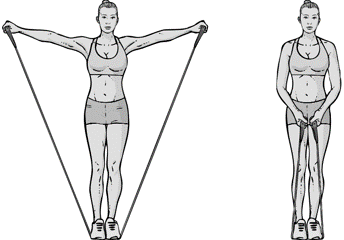
    Resistance bands shoulder lateral raises

    Modification: Use a lighter band or perform with one arm at a time. For more challenge, use a heavier band or shorten the band by moving your hands down the band.

    Reps: 10-12 repetitions.


    Related article: Best affordable resistance bands

    That’s your upper body done – well done on completing the workout! Resistance bands are a brilliant way to build strength without heavy weights. We’d love to hear how you got on with this workout, so please share your experience in the comments below.


  • Progressive Overload Explained: What is Progressive Overload?

    Ever wondered how you keep getting fitter, whether it’s mastering more push-ups, running further, or just feeling stronger in your daily life? There’s a fundamental principle at play in all effective fitness journeys, and it’s something you can absolutely apply at your local park gym: it’s called Progressive Overload.

    Simply put, progressive overload means gradually increasing the demands placed on your body during exercise. Your muscles are incredibly adaptable. When you challenge them, they respond by getting stronger, building more endurance, or growing in size. But here’s the crucial part: if you keep doing the exact same thing, your body adapts to that level of challenge, and you stop seeing progress. To keep improving, you need to give your muscles a new reason to grow and adapt.


    Why Progressive Overload is Your Best Friend

    Without progressive overload, your fitness journey eventually plateaus. You might maintain your current level, but you won’t get stronger, faster, or build more muscle. It’s the driving force behind all physical adaptation and the reason why consistent effort leads to tangible results.

    The beauty of it is that you don’t need fancy gym equipment or heavy weights to apply this principle. Your bodyweight and the simple, effective tools at a park gym are more than enough.


    How to Apply Progressive Overload at the Park Gym

    Since you can’t just add another weight plate to a pull-up bar, you need to get creative! Here are the most effective ways to progressively overload your workouts using park gym equipment and your own bodyweight:

    1. Increase Repetitions or Sets

    This is the most straightforward method. If you can comfortably do 10 push-ups, aim for 11 or 12 next time. If you’re doing 3 sets of squats, try for 4 sets. Small increases add up over time, forcing your muscles to work harder.

    2. Decrease Rest Times

    Reducing the break between your sets makes your workout more challenging for your cardiovascular system and muscular endurance. If you typically rest for 90 seconds between sets of dips, try cutting it down to 60 seconds. This forces your muscles to recover faster and work under more fatigue.

    3. Increase Time Under Tension (Slower Tempo)

    Instead of rushing through reps, slow them down. Focus on controlling both the lifting (concentric) and especially the lowering (eccentric) phases of an exercise. For example, take 3-4 seconds to lower yourself during a pull-up or a push-up. This increases the time your muscles are under strain, leading to greater growth stimulus.

    4. Choose Harder Exercise Variations

    This is where bodyweight training gets exciting! As an exercise becomes easy, find a more challenging version. For instance:

    • Push-ups: Progress from knee push-ups to regular push-ups, then to decline push-ups (feet elevated on a bench), or even pseudo-planche push-ups.
    • Pull-ups: Move from assisted pull-ups (using a band) to full pull-ups, then to L-sit pull-ups or weighted pull-ups (if you have a backpack).
    • Squats: Advance from bodyweight squats to walking lunges, then to Bulgarian split squats (one foot on a bench), or even pistol squat progressions.
    • Planks: Go from a standard plank to a single-arm plank, or a plank with hip dips.

    5. Increase Frequency

    If your body is recovering well, you might be able to train a muscle group more often. If you’re currently doing a full-body workout twice a week, consider adding a third session. This provides more opportunities for muscle stimulation and growth.


    Putting It All Together

    Progressive overload isn’t about making every single workout drastically harder. It’s about consistent, small increases over time. Keep a workout diary to track your reps, sets, and the variations you’re using. This allows you to see your progress and plan your next challenge.

    By consciously applying progressive overload, you’ll ensure your body is always adapting, always getting stronger, and always moving closer to your fitness goals. It’s the core principle that will keep your park gym workouts effective and exciting for the long haul.

  • 25-Minute Full Body Burn (No Equipment)

    This 25-minute routine is designed to push your limits, build endurance, and fire up every major muscle group using just your bodyweight and requires absolutely no equipment. Perfect for when you’re short on time but ready to sweat

    • Duration: 25 minutes
    • Equipment: None
    • Difficulty: Intermediate
    • Targets: Full Body (Legs, Glutes, Chest, Shoulders, Triceps, Core, Cardiovascular Endurance)

    Always begin with a 3-5 minute light warm-up (e.g., dynamic stretches, light jogging) and finish with 3-5 minutes of gentle stretching for the muscles you’ve worked.

    The Workout

    Perform each exercise for 45 seconds, followed by 15 seconds of rest. Complete 3-4 rounds of all exercises, taking 60-90 seconds rest between rounds.


    1. Squat Jumps

    Start in a squat position, then explode upwards into a jump, landing softly back into a squat. Keep your chest up and core engaged.

    Woman doing squat jumps

    Modification: For lower impact, perform regular bodyweight squats or fast air squats without the jump.

    Duration: 45 seconds.


    2. Push-ups

    Start in a high plank position, hands slightly wider than shoulders. Lower your chest towards the ground, then push back up. Maintain a straight line from head to heels.

    Woman doing a press-up with correct form

    Modification: Perform on your knees or with hands elevated on a bench/step for an easier angle. For more challenge, try decline push-ups (feet elevated).

    Duration: 45 seconds.


    3. Reverse Lunges

    Step one leg back and lower your hips until both knees are bent at approximately 90 degrees. Push off your back foot to return to the starting position. Alternate legs.

    Woman performing reverse lunges with correct form

    Modification: Reduce the depth of the lunge. For more challenge, hold a heavy object or wear a weighted vest or ruck sack.

    Duration: 45 seconds (alternate legs).


    4. Plank Jacks

    Start in a high plank position. Keeping your core tight and hips stable, jump your feet out to the sides (like a jumping jack), then jump them back together.

    Woman performs a plank with correct form

    Modification: Step one foot out at a time instead of jumping. For less intensity, perform a regular plank hold.

    Duration: 45 seconds.


    5. Burpees (Modified)

    Start standing, squat down and place hands on the ground, jump feet back to a plank, jump feet forward to squat, and stand up. (No push-up or jump at the top for this version to focus on continuous movement).

    Woman performs a burpee with correct form

    Modification: Step feet back and forward instead of jumping. For more challenge, add a push-up and a jump at the top.

    Duration: 45 seconds.


    6. Glute Bridges

    Lie on your back with knees bent, feet flat on the ground. Drive through your heels to lift your hips towards the ceiling, squeezing your glutes at the top. Slowly lower back down.

    Woman performs a glute bridge with correct form

    Modification: Perform with one leg extended for a unilateral challenge. For more challenge, place a resistance band around your knees.

    Duration: 45 seconds.

    Related article: Best Affordable Resistance Bands for Different Workouts


    Well done on completing the workout – you’ve definitely earned a well-deserved drink! We’re always keen to hear your thoughts and experiences, so please do let us know how you found this session in the comments below.


  • 7 Ways to Get Motivated When You Don’t Feel Like Working Out

    We’ve all been there. You wake up, or the end of the day rolls around, and that spark of motivation for a workout? It’s just… gone. Life gets busy, energy levels dip, and sometimes, despite knowing how good exercise is for us, the thought of actually *doing* it feels like climbing a mountain.

    Motivation isn’t a constant flame; it flickers, and sometimes it goes out. But the good news is, you don’t always need motivation to get started. Often, action creates motivation. Here are 7 practical, deeper strategies to get moving when you just don’t feel like it, perfect for your home or local park gym.


    1/ Embrace the 5-Minute Rule (and Prepare for It)

    This isn’t just about starting; it’s about making starting effortless. Tell yourself you only have to work out for 5 minutes. Set a timer. The psychological barrier to 5 minutes is tiny compared to 30 or 60. But here’s the key: make those 5 minutes as easy to begin as possible. Lay out your workout clothes the night before, have your water bottle filled, or even decide on the first exercise before you even stand up. Often, once your body is warmed up and the blood is flowing, that initial inertia vanishes, and you’ll find yourself wanting to complete the full session. If not? You’ve still achieved 5 minutes of movement, and that’s a win you can build on.


    2/ Change Your Scenery (Harness the Power of the Outdoors!)

    If your indoor space feels stagnant, a change of environment can be a powerful reset. Heading to your local park gym offers more than just a new backdrop. The fresh air, natural light, and green surroundings have a proven positive impact on mood and energy levels. Even the simple act of walking to the park can shift your mindset. The subtle stimulation of nature can break you out of a motivational slump, and the presence of others exercising can provide a gentle, unspoken push to get started.


    3/ Focus on the Post-Workout Feeling (and Journal It)

    When motivation is low, the workout itself can feel like a monumental task. Instead, shift your mental focus entirely to how amazing you’ll feel *after* it’s done. Remind yourself of that rush of endorphins, the sense of accomplishment, the clearer head, and the renewed energy. To make this even more effective, consider keeping a short “post-workout feeling” journal. After each session, jot down a few words about how you feel. On days when motivation is absent, read through these entries. This concrete evidence of positive outcomes can be a powerful psychological trigger.


    4/ Reconnect with Your Deepest “Why” (and Make it Visible)

    Why did you start this journey? Was it to feel stronger, have more energy for your kids, improve your health, or simply feel more confident? When motivation wanes, it’s often because we’ve lost sight of our deeper purpose. Take a moment to truly reflect on your core reason – not just “to get fit,” but *why* getting fit matters to *you*. Write this “why” down and place it somewhere visible: on your fridge, as your phone background, or in your workout diary. Tapping into that profound, personal reason can reignite your drive when superficial motivation is absent.


    5/ Schedule It & Treat It Like a Non-Negotiable Appointment

    Waiting for motivation to strike is a common pitfall. Instead, proactively schedule your workouts into your diary or calendar just like any other important meeting or commitment. Whether it’s 10 minutes in the morning before the kids wake up, or 20 minutes after work before dinner, block out the time. The act of having it scheduled makes it a pre-commitment, turning it into a non-negotiable part of your day. This removes the decision-making fatigue that often leads to skipping workouts.


    6/ Leverage Accountability (Even When You’re Solo)

    Accountability is a powerful external motivator. Find a friend, family member, or even an online community (like our comments section!) to share your goals and progress with. Knowing someone else is expecting you to show up, or that you’ll be sharing your experience, can be a huge push. Even if you’re working out alone at the park, consider setting up a simple check-in system with a friend, or join an online challenge. The feeling of being part of something bigger can provide the nudge you need.


    7/ Implement Strategic Non-Food Rewards

    Positive reinforcement works wonders, but it needs to be strategic. Set up small, non-food rewards for hitting your workout goals (e.g., completing 3 workouts in a week, or trying a new park gym). This could be 30 minutes of guilt-free TV, a new podcast, a long hot bath, or simply allowing yourself to relax without feeling like you “should” be doing something else. These rewards create a positive feedback loop, training your brain to associate exercise with pleasure and accomplishment, rather than just effort. Celebrate your consistency, not just your big achievements.


    Remember, everyone struggles with motivation sometimes – it’s part of being human. The key isn’t to wait for motivation to arrive, but to build habits and strategies that help you get moving even when it’s absent.

    If you have any suggestions of your own, share them below in the comments section.

  • Why Your Arms Aren’t Growing: 5 Mistakes to Avoid

    We all dream of stronger, more defined arms. Whether it’s to master that first pull-up, power through more push-ups, or simply feel more confident, focusing on your biceps and triceps is a common goal. Our park gyms offer fantastic opportunities to build arm strength, but it’s surprisingly easy to fall into common traps that can hinder your progress or even lead to frustration.

    Let’s uncover 5 arm training mistakes you need to be aware of, so you can make every session count and truly unlock your arm potential.


    1/ Focusing Only on Isolation (Ignoring the Big Picture)

    It’s tempting to spend all your time on bicep curls and tricep extensions, thinking they’re the direct route to bigger arms. However, this is a common oversight. Your arms don’t work in isolation in real life, and they certainly don’t in most effective strength training.

    The problem is that by only focusing on these smaller, single-joint movements, you miss out on the immense benefits of compound exercises. These are movements where multiple joints and muscle groups work together. Think about it: when you do a push-up, your triceps are working hard, but so are your chest and shoulders. When you do a pull-up, your biceps are heavily engaged, but they’re supported by your back muscles. These larger movements build far more overall strength and muscle mass, providing a stronger foundation for your arms.

    The Fix: Prioritise compound movements in your routine. Make exercises like pull-ups, dips (on parallel bars or a bench), and push-ups the core of your upper body days. Think of dedicated bicep or tricep exercises as excellent “finishers” after you’ve worked the bigger muscle groups.


    2/ Using Momentum (The “Swing” Factor)

    We’ve all seen it – someone swinging their body to get that last pull-up or jerking their torso to complete a bicep curl. While it might feel like you’re completing the rep, you’re actually cheating your muscles out of the work they need to grow stronger.

    When you use momentum, the tension is taken away from the specific arm muscles you’re trying to target. Your body finds the easiest path, which means your biceps and triceps aren’t getting the full stimulus. This not only limits your gains but can also put unnecessary strain on your joints and lower back.

    The Fix: Slow down and focus on strict, controlled movements. If you can’t complete a full range of motion without swinging, choose an easier modification. For pull-ups, try assisted versions or focus on negative pull-ups (jumping to the top and slowly lowering yourself down). For dips, use a bench with bent knees to reduce the load. Quality repetitions always trump quantity when it comes to building real strength.

    The Fix: Slow down and focus on strict, controlled movements. If you can’t complete a full range of motion without swinging, choose an easier modification.

    Barbell curl

    For pull-ups, try assisted versions or focus on negative pull-ups (jumping to the top and slowly lowering yourself down). For dips, use a bench with bent knees to reduce the load. Quality repetitions always trump quantity when it comes to building real strength.


    3/ Neglecting the Eccentric (Lowering) Phase

    After you’ve pushed up or pulled yourself up, it’s common to just let gravity take over and drop back to the starting position. This is a missed opportunity for significant gains!

    The lowering, or “eccentric,” phase of an exercise is incredibly powerful for building muscle and strength. It actually causes more beneficial micro-damage to muscle fibres, which then repair and grow back stronger. When you rush this part of the movement, you’re essentially cutting your workout’s effectiveness in half.

    The Fix: Consciously control the lowering part of every repetition. Aim for a count of 2-3 seconds as you lower yourself during a push-up, a dip, or a pull-up. You’ll feel the muscles working harder, and this focus on control will lead to better results and improved stability.


    4/ Overtraining Your Arms (More Isn’t Always Better)

    It’s easy to think that if you want bigger, stronger arms, you should train them every single day. However, this “more is better” mentality can actually backfire.

    Muscles don’t grow during the workout itself; they grow during the recovery period afterward. If you’re constantly breaking down your arm muscles without giving them adequate time to repair and rebuild, you’ll hinder your progress, increase fatigue, and put yourself at a higher risk of injury. Remember, your arms are also getting a workout on your chest, back, and even some shoulder days!

    The Fix: Aim to hit your arms directly (through compound movements and perhaps a few isolation exercises) 2-3 times a week, ensuring at least a day or two of rest in between sessions for the same muscle groups. Focus on quality, intensity, and proper recovery rather than simply volume.


    5/ Skipping Warm-ups and Cool-downs

    In a rush to get your workout in, it’s tempting to jump straight into the main exercises. Similarly, once you’re done, it’s easy to just pack up and go. Neglecting warm-ups and cool-downs, especially for your arms, is a mistake.

    Without a proper warm-up, your muscles and joints aren’t ready for the demands of exercise, increasing your risk of strains, sprains, and general stiffness. Your elbows and shoulders, which are heavily involved in arm training, are particularly vulnerable. A cool-down helps your body transition back to a resting state and can aid in flexibility and recovery, reducing post-workout soreness.

    The Fix: Always dedicate 5 minutes to a light warm-up before your arm-focused sessions. This could include arm circles, shoulder rotations, and light cardio like jogging in place. After your workout, spend another 5 minutes on gentle stretches for your biceps, triceps, and shoulders. Your body will thank you!


    Let us know your thoughts in the comment below.

  • 10-Minute Cardio & Agility Burst

    Ready to get your heart pumping and improve your agility in just 10 minutes? This high-energy, no-equipment routine is perfect for boosting your cardiovascular fitness and quickness, anytime, anywhere. All you need is some open space and yourself.

    • Duration: 10 minutes
    • Equipment: None
    • Difficulty: Beginner / Intermediate
    • Targets: Cardiovascular Endurance, Legs, Glutes, Core, Agility

    Always begin with a 2-3 minute light warm-up (e.g., light jogging on the spot, arm and leg swings) and finish with 2-3 minutes of gentle stretching on the muscles you’ve worked.

    The Workout

    For each exercise: perform for 40 seconds, followed by 20 seconds of rest. Complete 2 rounds of all exercises.


    1. High Knees

    Run in place, bringing your knees up towards your chest. Keep your core engaged and use your arms to pump.

    Duration: 40 seconds.


    2. Butt Kicks

    Run in place, focusing on bringing your heels up towards your glutes. Keep a light bounce and engage your hamstrings.

    Modification: Slow down to a marching pace, deliberately pulling your heel towards your glute.

    Duration: 40 seconds.


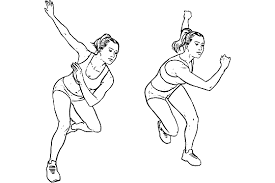
    3. Lateral Shuffles

    Start in a slightly squatting position. Take quick, shuffling steps sideways, staying low, and pushing off the outside foot to move. Shuffle a few steps one way, then reverse.

    Modification: Reduce speed and range of motion. For less impact, simply step sideways without the shuffle.

    Duration: 40 seconds.


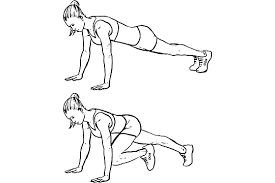
    4. Mountain Climbers

    Start in a high plank position. Alternately drive your knees towards your chest as if running, keeping your core tight and hips stable.

    Modification: Slow down the movement, stepping one foot at a time. For less intensity, perform standing knee-to-chest raises.

    Duration: 40 seconds.


    5. Quick Feet / Agility Taps

    Stand with feet hip-width apart. Rapidly alternate tapping your toes or balls of your feet on the ground as quickly as possible. Keep your body light and active, in a forwards then backwards rythmn.

    Modification: Focus on a consistent, controlled rhythm rather than maximum speed. You can also use imaginary lines on the ground to step over if space allows.

    Duration: 40 seconds.


    Well done on completing the workout – you’ve definitely earned a well-deserved drink! We’re always keen to hear your thoughts and experiences, so please do let us know how you found this session in the comments below.


    Ready to Take Your Agility to the Next Level?

    Try our recommended picks to boost your agility to a whole new level. We research good-value products to ensure you don’t break the bank.

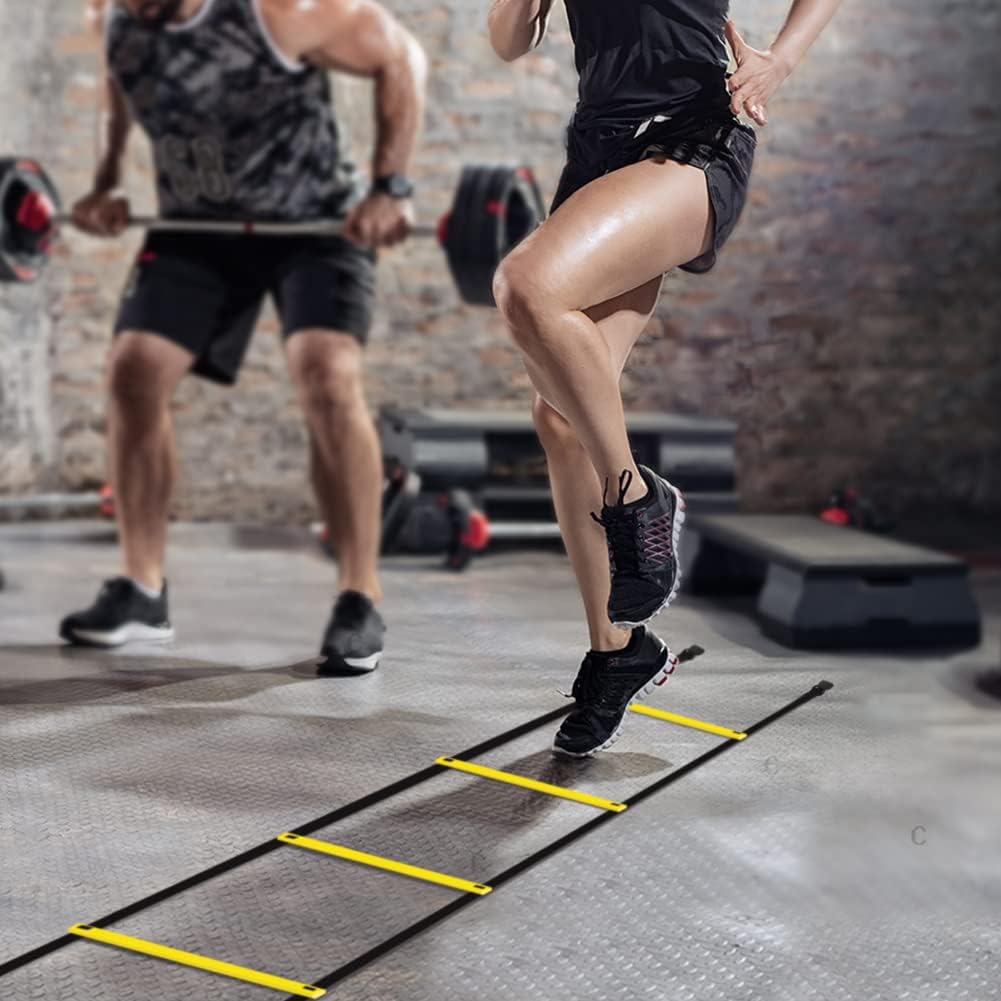
    Agility Ladder

    This 12-rung agility ladder is adjustable and lightweight – perfect for those on the go. Better yet it’s priced at just £12.99.

  • Build Your Own Home Gym: Affordable & Effective Setups

    For many of us, the idea of getting fit often conjures images of busy gyms or specific fitness classes. But what if your most convenient and consistent workout space was just a few steps away? Building a home gym might sound daunting or expensive, but as someone who started with just a couple of dumbbells and a coffee table, I can tell you it’s incredibly achievable.

    My own journey into fitness didn’t begin with a grand plan. Seven years ago, it started in my living room with a simple pair of £20 Argos dumbbells and our coffee table serving as a makeshift bench. It was a humble start, but it taught me that dedication matters far more than designer equipment. Over time, as my commitment grew, so did my collection of gear.

    Making the Most of Every Inch

    One of the biggest hurdles for a home gym is often space. Early on, I quickly learned to optimise. Instead of bulky freestanding racks, I opted for a pull-up bar that fits neatly across a door frame and can be removed when not in use. Small additions, like hooks on the wall for hanging resistance bands, kept things tidy and accessible without cluttering the floor. It’s all about being clever with what you have.

    Smart Equipment Choices That Grow With You

    Beyond those initial dumbbells, my home gym evolved with purpose. The next additions were vital: versatile resistance bands, a kettlebell for dynamic movements, and even a spin bike for cardio sessions. Essentials like a yoga mat provided comfort, and some padded floor tiles made the space more inviting for floor exercises. Little things make a big difference – a workout diary to track progress, a good pair of workout gloves for grip, and a tablet holder to easily follow along with routines were all invaluable.

    Crafting Your Inspiring Space

    A home gym isn’t just about the equipment; it’s about the environment. For me, adding a full-length mirror became crucial. It wasn’t about vanity; it allowed me to review my form, ensure I was moving safely, and see the gradual progress in my body shape, which was a huge motivator. Creating a clean, dedicated zone, even a small one, signals to your mind that it’s time to focus.

    Overcoming Obstacles with Clever Solutions

    Even with a growing collection, challenges arose. I found I didn’t have room for a dedicated machine for ‘pull’ exercises. The solution came in the form of tube resistance bands with a door anchor and various attachments, allowing me to create high or low anchor points for a full range of pulling movements. And for those times I was away from home, travel-friendly kit like a Powerball for grip strength, and my ever-present resistance bands meant consistency was never truly broken.

    Related article: Best affordable resistance bands for different workouts

    Building on a Budget: My Top Tips

    You truly don’t need to break the bank. My best advice for keeping costs down includes:

    • Adjustable Dumbbells: Adjustable dumbells are far cheaper than buying multiple sets of fixed-weight dumbbells, they save money and space.
    • Improvise with Household Items: Chairs or sturdy stools can easily substitute for benches or steps in many exercises.
    • Embrace Bodyweight: Calisthenics and bodyweight exercises are incredibly effective and require no equipment at all, making them the ultimate budget-friendly foundation.

    Building a home gym is a personal journey, just like any fitness endeavour. It’s about creating a space that works for you, fits your life, and empowers you to move, strengthen, and feel amazing. Combined with the fantastic resources of your local outdoor gyms, you have a truly unbeatable setup for your fitness goals.


    To support our free Park Gyms directory, this article contains links which may earn us a small commission at no extra cost to you. All products shown have been researched.
  • 20-Minute Leg & Core Builder (Bench)

    Ready to strengthen your lower body and build a resilient core? This dynamic 20-minute workout is ideal for any outdoor space, utilising just a park bench and some open ground. It’s designed to enhance your stability, power, and overall functional fitness.

    • Duration: 20 minutes
    • Equipment: Bench (or sturdy step), Open Space
    • Difficulty: Beginner / Intermediate
    • Targets: Lower Body, Glutes, Hamstrings, Quadriceps, Core, Lower Back

    Always begin with a 2-3 minute light warm-up (e.g., leg swings, gentle marching) and finish with 2-3 minutes of gentle stretching on the muscles you’ll be working.

    The Workout

    Perform 3-4 rounds of the following exercises. Take a short rest (60-90 seconds) between exercises if needed, and a longer rest (1-2 minutes) between rounds.


    1. Step-Ups (on Bench)

    Place your entire foot on the bench, drive up through your heel to stand tall, then step down with control. Alternate legs.

    Modification: Use a lower step or perform on flat ground for a simpler version. For more challenge, hold a heavy object or wear a rucksack.

    Reps: 10-15 repetitions per leg.


    2. Walking Lunges

    Take a controlled step forward, lowering your back knee towards the ground until both knees are at roughly 90 degrees. Push off your front foot to step into the next lunge.

    Modification: Perform static lunges (staying in place) if space is limited or for stability. For more challenge, hold a heavy object or wear a rucksack.

    Reps: 10-12 repetitions per leg.


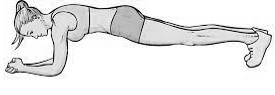
    3. Plank (Standard or Variations)

    Position yourself on your forearms and toes, maintaining a straight, rigid line from head to heels. Engage your core tightly.

    plank

    Modification: Perform on your knees for less intensity. For more challenge, try side planks or planks with alternating leg lifts.

    Duration: Hold for 30-45 seconds.


    4. Glute Bridges

    Lie on your back with knees bent, feet flat on the ground. Drive through your heels to lift your hips towards the ceiling, squeezing your glutes at the top.

    Modification: Perform with one leg extended for a unilateral challenge. For more challenge, place a resistance band around your knees.

    Reps: 15-20 repetitions.


    5. Box Jumps (or Bench Step-Ups)

    Stand in front of a sturdy bench or low step. Explode upwards to land softly on the bench, then step or jump back down. If jumping is not suitable, perform powerful bench step-ups.

    Modification: If jumping is challenging, perform dynamic step-ups where you step up quickly. For more challenge, find a higher, stable surface (ensure safety).

    Reps: 8-12 repetitions.


    Well done on completing the workout – you’ve definitely earned a well-deserved drink! We’re always keen to hear your thoughts and experiences, so please do let us know how you found this session in the comments below.

  • How Many Push-Ups You Really Need to Build Muscle

    Push-ups are one of the most effective, versatile bodyweight exercises you can do — and they require no equipment. Whether you’re working out in your local park gym, at home, or anywhere else with a bit of floor space, push-ups can help you build serious upper-body strength.

    They primarily target the chest, shoulders, and triceps, but they also hit the core and glutes when done correctly. So the real question is: how many push-ups do you need to do to see muscle gains?

    So, Can Push-Ups Really Build Muscle?

    The short answer is, Yes. The key is how you do them and how much effort you put in.

    To start building noticeable muscle, most people should aim to complete 3 sets of 25 to 30 push-ups with excellent form. That means going all the way down, pausing briefly at the bottom, pushing back up until your arms are fully extended, and avoiding momentum or sloppy reps. This controlled pace creates the kind of muscle tension that triggers growth.

    If you’re cranking out sets of 50+ without breaking a sweat, it’s probably not building much muscle anymore — you’re doing cardio at that point. Quality matters more than quantity.

    Push-Up Form: Keep It Clean

    Push-ups are simple, but easy to mess up. If your form breaks down, you’re wasting reps and increasing the risk of injury. Here’s how to get the most out of every set:

    1. Start in a high plank: Hands flat on the ground, directly below your shoulders. Body in a straight line from head to heels.
    2. Engage your body: Squeeze your glutes and brace your core — this stabilizes your spine.
    3. Lower under control: Drop down until your chest is about an inch from the floor. Elbows should point roughly 45 degrees from your sides.
    4. Push back up: Extend fully at the top without locking out aggressively.

    Every rep should feel like work — if it’s too easy, you’re either rushing or not going deep enough.

    What If You Can’t Do 25 Yet?

    No problem. Building muscle is about progressive overload — pushing your muscles a bit further each time. Even if you’re only getting 8, 10, or 15 reps per set right now, you can still build muscle as long as you push close to failure with good form.

    Avoid the temptation to “cheat” through extra reps with sloppy form. Stop your set once your body starts compensating — hips sagging, rep depth shortening, or head bobbing. You’ll get better results from 12 clean push-ups than 25 half-reps.

    Stick with it, and you’ll be hitting higher rep sets faster than you think.

    How to Keep Progressing

    Once you can knock out 3 sets of 25 or more push-ups with great form, it’s time to make things harder. More reps won’t necessarily equal more muscle at that point. Here’s how to increase the challenge:

    • Add resistance: Use a weighted vest or place a plate on your upper back (make sure it’s centered and secure).
    • Slow the tempo: Lower slowly (3–4 seconds), pause at the bottom, then push up powerfully.
    • Try advanced variations: Diamond push-ups, archer push-ups, or elevated feet push-ups will hit your muscles differently.

    The key is constantly finding new ways to stress your muscles.


    Ready to Take Your Push-Ups to the Next Level?

    Try our recommended picks to maximise those gains and ensure no push-up is wasted. We research good-value products to ensure you don’t break the bank.

    This weighted vest also comes with dual storage pockets to keep your keys and phone safe whilst you work out.

    parallettes

    These hardwearing parallettes are made of beech wood and come in a choice of two sizes.


  • Beat the Heat: Smart Tips for Your Park Gym Workout in the UK Heatwave

    Well, the forecast is in, and it looks like we’re in for a proper UK heatwave this week. For those of us who love getting active outdoors, it presents a bit of a challenge. I know the feeling – the sun’s out, the park’s inviting, and you just want to get your session in. But when temperatures soar, it’s absolutely crucial to adjust your routine and take extra care. Our brilliant outdoor gyms are fantastic, but we need to use them wisely when the mercury rises.

    First and foremost, hydration is your absolute best friend. Seriously, make that water bottle your constant companion. It’s not just about sipping during your workout; aim to drink plenty of water throughout the day, both before and after your session. When you’re sweating more than usual, your body loses vital fluids and electrolytes, so replenishing them is key to avoiding feeling sluggish or worse.

    Next up, timing is everything. Those scorching midday hours, typically between 11 AM and 3 PM, are best avoided for intense exercise. I often find myself getting out for an early morning session when the air is still crisp, or waiting until the late evening when things have cooled down a bit. You’ll not only feel more comfortable, but you’ll also reduce your risk of overheating.

    Finally, listen to your body – it’s always right. This isn’t the week to push for new personal bests or try to match your usual intensity. Shorten your workouts, take more frequent breaks in the shade, and don’t hesitate to reduce the number of sets or reps. If you start feeling dizzy, nauseous, or excessively tired, stop immediately, find some shade, and rehydrate. There’s no shame in dialling it back; staying safe means you’ll be fit to train another day.

    Our park gyms are amazing resources, and you can absolutely keep enjoying them during a heatwave. Just remember to be sensible, stay hydrated, pick your times carefully, and always prioritise how you’re feeling. Stay cool, stay active, and enjoy the summer safely.