Tag: fitness

  • Best Creatine Supplement

    If you’ve been grinding through high-volume pull-up ladders and explosive plyometrics at your local park, we applaud your grit. But before you chalk up for a third session of the same routine, consider the data: swapping your reliance on sheer willpower for a scientifically-backed power-up can give your progress a healthy fertilising.

    Research published in the most prestigious sports medicine journals suggests that supplementing with creatine—a naturally occurring compound that acts as your body’s primary energy currency—can lead to a measurable increase in power output and lean muscle mass, as well as other health benefits such as improved concentration. While your body produces some creatine naturally, “top-up” supplementation ensures your muscles are saturated, essentially flicking an evolutionary switch that allows for faster ATP replenishment. In plain English: it’s the difference between failing on your eighth rep and powering through a ninth or tenth.

    Powder, Pills, or Gummies?

    You needn’t settle for the gritty, unmixable powders of the past. To find the best creatine for your specific lifestyle, you need to look at how you actually train.

    • The OG: Micronised Monohydrate Powder If you’re the type to meal-prep with precision, this is your gold standard. It is the most researched iteration of the supplement, offering maximum purity and the best bang for your buck. It’s a seamless addition to a post-park protein shake, providing a foundational boost to muscle volumisation and recovery. Also available in flavourless or flavoured varieties.
    • The Commuter’s Choiec: Tablets and Capsules For the athlete who heads straight from the office to the outdoor gym, tablets are the ultimate convenience. You can ditch the shaker bottle and the mess; a precise dose can be kept in your gym bag, ready to be deployed whenever the bars are calling. It’s a streamlined approach for those who value efficiency over everything.
    • The Modern Evolution: Creatine Gummies If you find your supplement routine becoming a chore, gummies are the answer. They offer the same muscle-saturating benefits in a format that feels more like a reward than a requirement. No water, no mixing—just high-performance fuel that tastes like a cheat meal.

    Flick the Performance Switch

    Cast your net beyond the basic “protein-and-water” approach. Incorporating a high-quality creatine into your regime isn’t just about chasing aesthetics; it’s about optimising your biology for the demands of high-intensity calisthenics.

    Whether you’re looking to sharpen your muscle-ups or simply want to recover fast enough to do it all again tomorrow, this is the smartest investment you can make for the price of a weekly coffee. It’s time to stop leaving your potential at the park gate.

    Ready to upgrade your output? Pick up our top-rated recommendations below and start seeing the measurable difference in your next session.

    TypeBrandBest Buy
    PowderNutrition GeeksCheck Price on Amazon
    GummiesWarriorCheck Price on Amazon
    TabletsNuke NutritionCheck Price on Amazon

  • Top 5 Best Fitness Watches in 2026

    We’ve scoured the booming fitness watch market to bring you (in our opinion), the 5 best fitness watches on the market in 2026.

    Everyone can benefit from using a fitness watch, whether your fitness is approached in a casual manner, or professionally. This list provides a suitable choice for everyone.

    1. Garmin Venu 4

    Garmin Venu 4 Fitness Watch

    Price bracket: £390-£410

    Garmin has become a staple for fitness enthusiasts, and for good reason. Their Venu 4 offers a fantastic balance of high-end athletic data and everyday style, making it a well-rounded option for both tracking a high-intensity session on the bars and wearing to the office. The new “Bio-Sync” sensor is consistently praised for its accuracy during HIIT, avoiding the “lag” that some wrist-based monitors can have. It’s not overly bulky, making it easy to wear while you’re on the move or doing calisthenics.

    • Pros: Exceptional heart-rate accuracy; stunning AMOLED screen; no monthly subscription required for your data; stainless steel design.
    • Cons: The touchscreen can be a little fiddly if your hands are sweaty mid-workout.

    Check Price on Amazon


    2. Apple Watch Series 11

    Apple Watch Series 11

    Price bracket: £420-£469

    Apple is a trusted powerhouse in the wearable industry, known for its seamless integration. The Series 11 brings that same trusted quality in a sleek, familiar format. For those who follow guided workouts or use the Apple Fitness+ app, it’s a standout choice, offering a genuinely intuitive experience. It’s a fantastic choice for those looking to keep a close eye on their general health, with its new predictive vitals alerts that can spot a cold before you even feel the symptoms.

    • Pros: Best-in-class app ecosystem; incredibly smooth interface; reliable ECG and health monitoring.
    • Cons: Battery requires a daily charge, which might not suit everyone.

    Check Price on Amazon


    3. Garmin Fenix 8

    Garmin Fenix 8 Fitness Watch

    Price bracket: £700-£750

    The Fenix 8 is the gold standard for serious athletes who need a watch as tough as their workout. Built to military standards, it’s virtually indestructible—ideal if you’re prone to knocking your watch against metal pull-up bars or outdoor gym equipment. This watch packs incredible battery life into a rugged frame, and the improved solar charging means it can last nearly a month on a single charge. It’s a reliable go-to for those who want the most detailed mapping and recovery data available.

    • Pros: Incredible durability; massive battery life with solar charging; built-in LED flashlight.
    • Cons: It’s a larger, heavier watch that might feel a bit bulky on smaller wrists.

    Check Price on Amazon


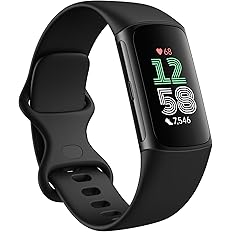
    4. Fitbit Charge 6

    Fitbit Charge 6 Fitness Watch

    Price bracket: £99

    Fitbit has carved out a strong reputation for offering great value without compromising on the essentials. The Charge 6 is a smooth, satisfying option that delivers all the core metrics—like heart rate, steps, and sleep—in a slim, discrete band. It’s often a go-to for those looking for a reliable, everyday fitness boost that’s easy on the wallet, making it a perfect fit for the budget-conscious outdoor fitness enthusiast. Its simplicity is its greatest strength, making it very palatable for those who don’t want a “mini-computer” on their arm.

    • Pros: Excellent value for money; slim and lightweight design; very user-friendly interface; superb for users whose primary usage is fitness.
    • Cons: Lacks some of the more advanced features provided by other watches.

    The link below includes 6 months’ free premium Fitbit membership, which unlocks some more advanced features.

    Check Price on Amazon


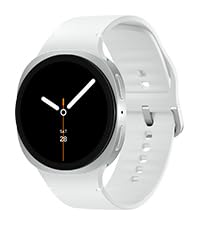
    5. Samsung Galaxy Watch 8

    Samsung Galaxy Watch 8

    Price bracket: £339-£349

    The Galaxy Watch 8 is a brilliant smartwatch first and a serious fitness tool second. For Android users, it offers an unmatched experience, particularly with its “Body Composition” feature which helps you track muscle mass and body fat percentage over time. It’s a clean, refreshing alternative to the more “rugged” looking sports watches. While it’s a powerhouse for health tracking, it remains a stylish option for everyday wear.

    • Pros: Holistic health tracking (like skeletal muscle mass); competitive pricing; beautiful build quality.
    • Cons: Certain health features are only fully functional when paired with a Samsung smartphone.

    Check Price on Amazon


    Fitness Watch Comparison Table

    ModelBattery LifeBest For
    Garmin Venu 412 DaysAll rounder
    Apple Watch S1124-36 HoursApple users
    Garmin Fenix 816 DaysPro athlete
    Fitbit Charge 67 DaysBest budget option
    Samsung Galaxy 840 HoursAndroid users

    Final Thoughts

    Before buying, consider if you actually need built-in GPS. If you always carry your phone while exercising, a cheaper tracker without GPS could save you some pennies.

    Let us know which features matter most to you in the comments below!

    To support our website, this article contains links which may earn us a small commission at no extra cost to you. All products shown have been researched, and any links to affiliate products do not influence our reviews. Prices listed were accurate at the time of writing.

  • Workout Motivation Tips for After Christmas

    The week between Christmas and the New Year is a strange psychological limbo. We are often caught between the guilt of recent indulgence and the overwhelming pressure of impending resolutions. For many, the desire to “work off” the festive season is fueled more by shame than by genuine motivation.

    To truly get back on track, we need to stop fighting our bodies and start understanding our brains. Use these tips below to help navigate the psychological shift from holiday mode back into high gear.

    1. Beware the “All-or-Nothing” Trap

    The most common psychological pitfall after Christmas is Dichotomous Thinking. This is the belief that you are either “on the wagon” or “off it.” When we feel we’ve “ruined” our progress with a few days of heavy eating, the brain often decides to abandon all discipline until January 1st.

    The Fix: Practice the “Volume Dial” approach. Instead of an On/Off switch, think of your healthy habits as a dial. If you can’t turn it up to 10 (an hour-long workout), don’t turn it to 0. Keep it at a 2 or 3 with a ten-minute walk. Consistency beats intensity every time.

    2. Leverage the “Fresh Start Effect”

    Behavioral scientists have identified a phenomenon called the Fresh Start Effect. We are naturally more motivated at “temporal landmarks”—Mondays, the first of the month, or the end of a holiday. These landmarks allow the brain to relegate past “failures” to a “previous version” of ourselves.

    The Fix: Use this psychological clean slate to your advantage. Don’t wait until the New Year is halfway through January. Pick a specific date this week to be your personal “Day One,” and treat it as a hard boundary between the holiday version of you and the current version.

    3. Focus on “Addition,” Not “Subtraction”

    Post-holiday motivation often centers on restriction: no sugar, no carbs, less sitting. Psychologically, focusing on what we are losing creates a sense of deprivation, which inevitably leads to a “rebound” binge.

    The Fix: Reframe your goals through crowding out. Instead of saying “I won’t eat chocolate,” say “I will add two liters of water and a serving of greens to my day.” By focusing on what you are adding, you naturally leave less room—and less mental energy—for the habits you’re trying to reduce.

    4. Shorten the Feedback Loop

    The reason we find it so easy to eat festive food is that the reward is instant (dopamine). The reason we find it hard to exercise is that the reward (weight loss or fitness) is delayed.

    The Fix: Give yourself an immediate “win.” Don’t exercise to lose weight three weeks from now; exercise to feel the immediate “mood lift” or “mental clarity” that comes ten minutes after a walk. When you link the activity to an immediate psychological benefit, your brain is far more likely to want to repeat it.

    Summary: Be Kind to Your “Holiday Self”

    The most important psychological tool you have is self-compassion. Research consistently shows that people who forgive themselves for “slipping up” return to their healthy habits much faster than those who practice self-criticism.

    You didn’t “ruin” anything; you had a season of celebration. Now, it’s simply time to transition back into your groove.

  • 20-Minute Upper Body Power (Resistance Bands)

    Short on time but ready to build some serious upper body strength? This efficient 20-minute workout is perfect for any outdoor space – your local park, garden, or even your living room – with just a resistance band. Get ready to activate your chest, back, and shoulders for a powerful session.

    • Duration: 20 minutes
    • Equipment: Resistance Band (and a sturdy anchor point)
    • Difficulty: Beginner / Intermediate
    • Targets: Back, Chest, Shoulders, Arms

    Always begin with a 2-3 minute light warm-up (e.g., arm circles, light jogging on the spot) and finish with 2-3 minutes of gentle stretching on the muscles you’ll be working.

    The Workout

    Perform 3 rounds of the following exercises, aiming for the suggested repetitions. Take a short rest (60-90 seconds) between exercises if needed, and a longer rest (1-2 minutes) between rounds.


    1. Resistance Band Bent Over Rows

    Stand on the middle of the band with your feet shoulder-width apart. Hinge forward at the hips, keeping your back straight, and pull the band towards your chest, squeezing your shoulder blades together. Slowly return to the start.

    Resistance bands bent over rows

    Modification: Use a lighter band or decrease the range of motion. For more challenge, use a heavier band or move your hands closer to the middle of the band.

    Reps: 12-15 repetitions.


    2. Resistance Band Chest Press

    Anchor the band to a sturdy object like a wall or door anchor behind you. Stand facing away from the anchor, holding the handles at chest height. Press your hands straight out in front of you, engaging your chest, then return with control.

    Resistance bands chest press

    Modification: If no anchor is available, you can perform push-ups instead. For more challenge, stand further away from the anchor point.

    Reps: 12-15 repetitions.


    3. Resistance Band Standing Shoulder Press

    Stand on the middle of the band with your feet shoulder-width apart. Hold the handles at your shoulders with your palms facing forward. Press your hands straight overhead, then lower them slowly back to your shoulders.

    Resistance bands standing shoulder press

    Modification: Use a lighter band. For more challenge, use a heavier band or shorten the band by moving your hands down the handles.

    Reps: 10-12 repetitions.


    4. Resistance Band Shoulder Front Raises

    Stand on the band with your feet shoulder-width apart. Hold the ends of the band and, with straight arms, raise them directly in front of you to shoulder height. Lower with control.

    Modification: Use a lighter band or perform with one arm at a time. For more challenge, use a heavier band or move your hands down the band.

    Reps: 10-12 repetitions.


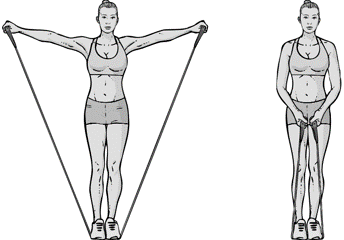
    5. Resistance Band Shoulder Lateral Raises

    Stand on the band with your feet shoulder-width apart. Holding the ends, raise your straight arms out to the sides until they are parallel with the floor. Lower with control.

    Resistance bands shoulder lateral raises

    Modification: Use a lighter band or perform with one arm at a time. For more challenge, use a heavier band or shorten the band by moving your hands down the band.

    Reps: 10-12 repetitions.


    Related article: Best affordable resistance bands

    That’s your upper body done – well done on completing the workout! Resistance bands are a brilliant way to build strength without heavy weights. We’d love to hear how you got on with this workout, so please share your experience in the comments below.


  • Should You Have Protein Before or After a Workout? The Truth Might Surprise You…

    Should You Have Protein Before or After a Workout?

    Protein plays a key role in any workout routine — it’s the foundation for building and repairing muscles, supporting recovery, and fuelling your body for performance. But when it comes to when you consume it, does timing actually make a difference?

    Here’s what you need to know about protein timing, how it can support your training, and how to make it work for your goals.


    First Things First: Daily Protein Intake Comes First

    Before worrying about timing, the most important factor is hitting your daily protein intake. Whether you’re trying to build strength, support recovery, or maintain lean muscle, consistently reaching your daily target matters more than whether you have your shake before or after your session.

    You can meet your protein needs through whole foods, and for many people, that’s both the most effective and affordable approach. While some choose to supplement with powders, most people can hit their protein goals affordably using whole foods alone. If you’re looking for practical tips on eating more protein without breaking the bank, check out our guide to budget-friendly protein sources.


    So, Does Timing Matter?

    While exact timing isn’t critical, there are still benefits to consuming protein around your workouts — especially if you’re training hard or have specific goals like muscle growth or performance.

    The sweet spot? Try to eat a protein-rich meal or snack within four to six hours around your workout window. That might mean a meal beforehand and a snack after, or vice versa — whatever works best for your schedule and digestion.


    Benefits of Eating Protein Before a Workout

    Eating protein 30 to 45 minutes before your workout, ideally with some carbohydrates, can offer several benefits:

    • Fuel your muscles: Protein supports energy production and muscular endurance, especially during more intense sessions.
    • Reduce muscle breakdown: Training causes small muscle fibre tears — having protein available can help reduce breakdown and kick-start repair.
    • Support muscle adaptation: Pre-workout protein may enhance how well your muscles respond and adapt to training.
    • Feel fuller and more focused: A protein-rich snack can help prevent hunger pangs mid-session and keep your energy levels steady.

    Good options include Greek yoghurt with oats, eggs on toast, or a light protein smoothie if you’re short on time.


    Benefits of Eating Protein After a Workout

    Post-workout protein helps kick-start recovery. Aim to eat within 30 to 60 minutes if possible, though research shows this window is flexible.

    Benefits include:

    • Muscle repair and growth: Protein helps rebuild muscle fibres that are broken down during training.
    • Less soreness and inflammation: Protein supports recovery and may help reduce inflammation that leads to delayed-onset muscle soreness.
    • Replenish energy: A post-workout protein snack or meal can restore energy and support hydration.
    • Support lean muscle gains: Regular post-training protein helps maintain and build lean mass over time.

    Quick post-workout options: eggs and wholegrain toast, a chicken wrap, or cottage cheese with fruit.


    Protein for Different Workout Types

    Your needs can also vary depending on the intensity of your workouts:

    • High-intensity training (like CrossFit, HIIT, or endurance running): Eat a mix of carbs and protein before and after training for best performance and recovery.
    • Lower-intensity sessions (like yoga, walking, or bodyweight workouts): You may not need a specific protein shake — just ensure your usual meals include enough protein.

    Daily Protein Goals and How to Hit Them

    Most people benefit from 1.1 to 1.5 grams of protein per kilogram of bodyweight per day, especially if they’re active. That’s higher than the general minimum of 0.75g/kg/day often recommended.

    To make it easier:

    • Aim for 20–40g of protein per meal, spread over 3–5 meals/snacks per day.
    • Don’t forget carbs — a general ratio of 3:1 (carbs:protein) supports recovery. If you’re aiming for fat loss, a 2:1 ratio may be more appropriate.

    Need ideas for affordable protein-rich foods? Here’s our guide to budget-friendly protein sources.


    Protein Sources to Focus On

    Getting a mix of complete and incomplete proteins helps cover all essential amino acids:

    • Complete proteins (contain all 9 essential amino acids): meat, fish, dairy, eggs
    • Incomplete proteins: beans, lentils, nut butters, whole grains

    For quick options, try:

    • Eggs
    • Greek yoghurt
    • Canned fish
    • Lentils or chickpeas
    • Cottage cheese
    • High-protein cereals or wraps

    Protein powders can be helpful for convenience, especially around workouts. Whey protein is known for muscle-building support and anti-inflammatory benefits. Plant-based options like pea, hemp, or rice protein are great for vegan diets. Still, for most people, protein needs can be met with everyday food choices.

    Receive 15% off your first MyProtein.com order by clicking this link


    Final Takeaway

    Whether you prefer fuelling up before or after a workout, the bottom line is simple: prioritise hitting your daily protein goals consistently. Find a timing routine that suits your lifestyle, supports your training, and keeps your nutrition simple and effective.

  • High Protein Foods for Less: Fueling Your Workouts on a Budget

    Getting enough protein is a cornerstone of any fitness journey. It’s essential for building and repairing muscles, keeping you feeling full, and fuelling those workouts. But let’s be honest, sometimes the cost of high-protein foods can feel like another barrier to staying healthy, but it needn’t be.

    The good news is, you can absolutely boost your protein intake without emptying your wallet. It’s all about making smart choices and getting a little creative in the kitchen. Here are some top tips for finding high-protein foods for less, helping you fuel your body effectively for all your workouts.


    Why Protein is Your Workout’s Best Friend

    Before we dive into the budget-friendly options, a quick reminder of why protein is so crucial: it’s the building block for your muscles, helps with recovery after exercise, and keeps you feeling satisfied for longer, reducing the urge to snack on less healthy options. It’s a powerhouse nutrient that supports your energy levels and overall well-being.


    8 Ways to Get More Protein for Less

    1. Add Beans and Lentils

    Beans and lentils are incredibly versatile, packed with protein and fibre, and incredibly economical. Adding a can of chickpeas to a curry, black beans to a chilli, or red lentils to a soup is a fast and budget-friendly way to add a significant protein boost to your meals. They’re fantastic for bulking up rice dishes, stews, or even salads, making your meals more satisfying and nutritious.


    2. Ground Rules

    Ground (mince) chicken, turkey, and beef varieties are almost always cheaper per serving than their whole-cut equivalents. They’re perfect for batch cooking and can be used in so many dishes: lean mince for spaghetti bolognese, turkey mince for healthy burgers, or chicken mince for stir-fries. Buying larger packs when they’re on offer and freezing portions can save you even more.


    3. The Greek Goddess

    Unsweetened Greek yoghurt is a protein superstar. It can be bought in larger tubs for better value and is incredibly versatile. Enjoy it alone with some berries, use it as a high-protein base for overnight oats, swap it for sour cream in recipes, or even use it in savoury dips. Look for plain, natural varieties to avoid added sugars. Greek yoghurt provides a whopping 10g of protein per 100g of yoghurt, making it a great cheap source of protein.


    4. Eggs: The Everyday Hero

    Eggs are arguably the most affordable and complete protein source available. They’re quick to cook, incredibly versatile, and packed with essential nutrients. Whether scrambled for breakfast, boiled for a snack, or added to a stir-fry, eggs are a fantastic way to add high-quality protein to any meal of the day without a big expense. A large chicken’s egg contains around 6g of protein!


    5. Embrace Canned Fish

    Don’t overlook the power of canned fish like tuna, sardines, and mackerel. They’re incredibly convenient, have a long shelf life, and are packed with protein and healthy fats (especially omega-3s). Add tuna to salads or sandwiches, mash sardines on toast, or mix mackerel into pasta dishes for a quick, affordable, and nutritious protein boost.


    6. Cottage Cheese Comeback

    Often overlooked, cottage cheese is a fantastic, budget-friendly source of slow-digesting protein (casein), making it great for satiety. Like Greek yoghurt, it’s versatile: enjoy it plain, with fruit, mixed into scrambled eggs, or even blended into smoothies for an undetectable protein kick. Look for larger tubs for better value.


    7. Raid the Frozen Aisle

    Buying protein sources like chicken breasts, fish fillets, or even bags of prawns from the frozen aisle can often be significantly cheaper than fresh options. They last longer, reduce food waste, and you can simply take out what you need. This is perfect for batch cooking and ensuring you always have a protein source on hand for those busy days.

    8. Look for Yellow Stickers

    The reduced aisle is an excellent way of finding high quality foods such as chicken and beef, at a fraction of the normal price. Remember any food which is approaching its use by date can be put in the freezer when you get home, or cooked the same day and chilled for 2-3 days once cooked.


    Fuel Your Progress, Not Your Debt!

    Getting enough protein doesn’t have to be a luxury. By incorporating these budget-friendly options and smart shopping habits into your routine, you can easily meet your protein needs, support your muscle growth and recovery, and stay energised for all your outdoor fitness adventures. Experiment with these ideas, find what works for you, and enjoy the benefits of a well-fuelled body.

  • The Best Rep Ranges for Muscle Strength, Endurance, and Hypertrophy

    You’ve found your perfect park gym, you’ve got your workout plan, and you’re ready to go. But then you look at an exercise like push-ups or squats, and you see “3 sets of 10 reps.” It’s the classic advice, and for good reason – it works, especially when you’re just starting out.

    But what happens when those 3 sets of 10 start feeling easy? If you’re serious about making progress – whether that’s getting stronger, building more muscle, or improving your stamina – then understanding rep ranges is your next secret weapon. It’s about tailoring your training to your specific goals, and the fantastic news is, you can absolutely do this with the free equipment at your local outdoor gym.


    Why Rep Ranges Matter (Beyond Beginner Gains)

    Once your body adapts to a certain challenge, it stops growing. To keep seeing results, you need to introduce something new – this is the principle of Progressive Overload. One powerful way to do this is by adjusting your rep ranges. Different rep ranges stimulate your muscles in different ways, targeting various types of muscle fibres and energy systems.

    Let’s break down the three main goals and the rep ranges that best support them:


    1. Building Raw Strength (1-6 Reps)

    Goal: To lift or move the heaviest possible weight (or your bodyweight in its hardest variation) for a few powerful repetitions. Think mastering a full pull-up, a single-leg squat, or an explosive box jump.

    The Sweet Spot: Typically 3-5 sets of 1-6 repetitions per exercise.

    How to Apply at the Park Gym: Since you can’t add weight plates, you achieve this by choosing the hardest possible variation of an exercise you can still perform with good form. Examples include:

    • Pull-ups: If you can do 6, try to do 7. If that’s easy, focus on slower, more controlled negatives (jumping up and slowly lowering yourself for 3-5 seconds).
    • Push-ups: Progress to decline push-ups (feet on a bench), or try pseudo-planche push-ups (hands lower, leaning forward).
    • Squats: Work towards pistol squat progressions (holding onto a bar for balance, then single-leg squats).

    2. Growing Muscle (Hypertrophy) (6-12 Reps)

    Goal: To increase muscle size. This involves creating enough “time under tension” and metabolic stress to stimulate muscle growth. You’ll often feel a “pump” in your muscles.

    The Sweet Spot: Typically 3-4 sets of 6-12 repetitions per exercise.

    How to Apply at the Park Gym: Focus on controlled movements, ensuring your muscles are doing the work throughout the full range of motion. You want to feel the burn towards the end of your set.

    • Push-ups: Aim for 8-12 clean reps. If that’s easy, try a slightly harder variation (e.g., hands closer together, or a slightly elevated surface for incline push-ups) to stay within this rep range.
    • Squats/Lunges: Focus on slow, controlled descents (2-3 seconds down) and powerful ascents. Try walking lunges for 10-12 steps per leg.
    • Inverted Rows: Adjust your body angle on a low bar to hit 8-12 challenging reps, focusing on squeezing your shoulder blades.

    3. Boosting Endurance (12+ Reps)

    Goal: To improve your muscles’ ability to perform repeated contractions over an extended period. Think about long runs, continuous circuits, or simply having more stamina for daily activities.

    The Sweet Spot: Typically 2-3 sets of 12-20+ repetitions per exercise.

    How to Apply at the Park Gym: Focus on maintaining good form even as fatigue sets in. This is where circuit training (moving from one exercise to the next with minimal rest) shines.

    • Jumping Jacks/High Knees: Go for continuous movement for 45-60 seconds.
    • Bodyweight Squats/Lunges: Aim for higher reps (15-20+) or perform them as part of a circuit with short rests.
    • Plank Holds: Extend your hold time (e.g., 60 seconds or more).
    • Push-ups: If you can do 15 easy push-ups, try to do 20 or more, or immediately follow them with another exercise in a circuit.

    Rest Times: The Unsung Hero

    Just as important as the reps themselves is how long you rest between sets. This allows your muscles to recover enough to perform the next set effectively, but not so much that you lose the training stimulus.

    • Strength & Power: 2-5 minutes rest. You need full recovery to lift heavy or perform explosively.
    • Hypertrophy: 30-90 seconds rest. Enough to recover, but short enough to keep the muscle under tension and create that “pump.”
    • Endurance: 30 seconds or less. You want to challenge your muscle’s ability to work with minimal recovery.

    At the park gym, you might not have a timer handy. Learn to listen to your body: for strength, wait until you feel truly ready for the next challenging set. For endurance, move quickly from one exercise to the next.


    The Power of Mixing It Up

    While it’s smart to focus on the rep range that aligns with your primary goal, don’t be afraid to incorporate other ranges into your routine. Our muscles are made up of different fibre types: some are great for strength (Type II), and others for endurance (Type I). By varying your rep ranges, you stimulate all these fibres, leading to more comprehensive growth and preventing plateaus.

    For example, if your main goal is muscle growth (hypertrophy), you might spend most of your time in the 6-12 rep range. But occasionally, throwing in a heavy set of 3-5 reps (for strength) or a high-rep set of 15-20+ (for endurance) can provide a new stimulus and “shock” your muscles into further growth.


    Putting It Into Practice at Your Park Gym

    Now that you understand the “why” behind rep ranges, start experimenting! Look at your current workouts and think about how you can adjust the reps or exercise variations to align with your specific goals. Remember, consistency and effort are always key, but smart application of rep ranges will fast-track your results and keep your outdoor training exciting.

  • Progressive Overload Explained: What is Progressive Overload?

    Ever wondered how you keep getting fitter, whether it’s mastering more push-ups, running further, or just feeling stronger in your daily life? There’s a fundamental principle at play in all effective fitness journeys, and it’s something you can absolutely apply at your local park gym: it’s called Progressive Overload.

    Simply put, progressive overload means gradually increasing the demands placed on your body during exercise. Your muscles are incredibly adaptable. When you challenge them, they respond by getting stronger, building more endurance, or growing in size. But here’s the crucial part: if you keep doing the exact same thing, your body adapts to that level of challenge, and you stop seeing progress. To keep improving, you need to give your muscles a new reason to grow and adapt.


    Why Progressive Overload is Your Best Friend

    Without progressive overload, your fitness journey eventually plateaus. You might maintain your current level, but you won’t get stronger, faster, or build more muscle. It’s the driving force behind all physical adaptation and the reason why consistent effort leads to tangible results.

    The beauty of it is that you don’t need fancy gym equipment or heavy weights to apply this principle. Your bodyweight and the simple, effective tools at a park gym are more than enough.


    How to Apply Progressive Overload at the Park Gym

    Since you can’t just add another weight plate to a pull-up bar, you need to get creative! Here are the most effective ways to progressively overload your workouts using park gym equipment and your own bodyweight:

    1. Increase Repetitions or Sets

    This is the most straightforward method. If you can comfortably do 10 push-ups, aim for 11 or 12 next time. If you’re doing 3 sets of squats, try for 4 sets. Small increases add up over time, forcing your muscles to work harder.

    2. Decrease Rest Times

    Reducing the break between your sets makes your workout more challenging for your cardiovascular system and muscular endurance. If you typically rest for 90 seconds between sets of dips, try cutting it down to 60 seconds. This forces your muscles to recover faster and work under more fatigue.

    3. Increase Time Under Tension (Slower Tempo)

    Instead of rushing through reps, slow them down. Focus on controlling both the lifting (concentric) and especially the lowering (eccentric) phases of an exercise. For example, take 3-4 seconds to lower yourself during a pull-up or a push-up. This increases the time your muscles are under strain, leading to greater growth stimulus.

    4. Choose Harder Exercise Variations

    This is where bodyweight training gets exciting! As an exercise becomes easy, find a more challenging version. For instance:

    • Push-ups: Progress from knee push-ups to regular push-ups, then to decline push-ups (feet elevated on a bench), or even pseudo-planche push-ups.
    • Pull-ups: Move from assisted pull-ups (using a band) to full pull-ups, then to L-sit pull-ups or weighted pull-ups (if you have a backpack).
    • Squats: Advance from bodyweight squats to walking lunges, then to Bulgarian split squats (one foot on a bench), or even pistol squat progressions.
    • Planks: Go from a standard plank to a single-arm plank, or a plank with hip dips.

    5. Increase Frequency

    If your body is recovering well, you might be able to train a muscle group more often. If you’re currently doing a full-body workout twice a week, consider adding a third session. This provides more opportunities for muscle stimulation and growth.


    Putting It All Together

    Progressive overload isn’t about making every single workout drastically harder. It’s about consistent, small increases over time. Keep a workout diary to track your reps, sets, and the variations you’re using. This allows you to see your progress and plan your next challenge.

    By consciously applying progressive overload, you’ll ensure your body is always adapting, always getting stronger, and always moving closer to your fitness goals. It’s the core principle that will keep your park gym workouts effective and exciting for the long haul.

  • 25-Minute Full Body Burn (No Equipment)

    This 25-minute routine is designed to push your limits, build endurance, and fire up every major muscle group using just your bodyweight and requires absolutely no equipment. Perfect for when you’re short on time but ready to sweat

    • Duration: 25 minutes
    • Equipment: None
    • Difficulty: Intermediate
    • Targets: Full Body (Legs, Glutes, Chest, Shoulders, Triceps, Core, Cardiovascular Endurance)

    Always begin with a 3-5 minute light warm-up (e.g., dynamic stretches, light jogging) and finish with 3-5 minutes of gentle stretching for the muscles you’ve worked.

    The Workout

    Perform each exercise for 45 seconds, followed by 15 seconds of rest. Complete 3-4 rounds of all exercises, taking 60-90 seconds rest between rounds.


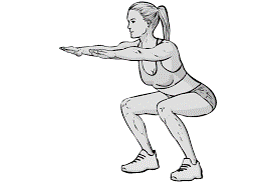
    1. Squat Jumps

    Start in a squat position, then explode upwards into a jump, landing softly back into a squat. Keep your chest up and core engaged.

    Woman doing squat jumps

    Modification: For lower impact, perform regular bodyweight squats or fast air squats without the jump.

    Duration: 45 seconds.


    2. Push-ups

    Start in a high plank position, hands slightly wider than shoulders. Lower your chest towards the ground, then push back up. Maintain a straight line from head to heels.

    Woman doing a press-up with correct form

    Modification: Perform on your knees or with hands elevated on a bench/step for an easier angle. For more challenge, try decline push-ups (feet elevated).

    Duration: 45 seconds.


    3. Reverse Lunges

    Step one leg back and lower your hips until both knees are bent at approximately 90 degrees. Push off your back foot to return to the starting position. Alternate legs.

    Woman performing reverse lunges with correct form

    Modification: Reduce the depth of the lunge. For more challenge, hold a heavy object or wear a weighted vest or ruck sack.

    Duration: 45 seconds (alternate legs).


    4. Plank Jacks

    Start in a high plank position. Keeping your core tight and hips stable, jump your feet out to the sides (like a jumping jack), then jump them back together.

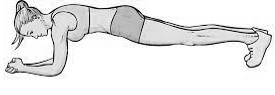
    Woman performs a plank with correct form

    Modification: Step one foot out at a time instead of jumping. For less intensity, perform a regular plank hold.

    Duration: 45 seconds.


    5. Burpees (Modified)

    Start standing, squat down and place hands on the ground, jump feet back to a plank, jump feet forward to squat, and stand up. (No push-up or jump at the top for this version to focus on continuous movement).

    Woman performs a burpee with correct form

    Modification: Step feet back and forward instead of jumping. For more challenge, add a push-up and a jump at the top.

    Duration: 45 seconds.


    6. Glute Bridges

    Lie on your back with knees bent, feet flat on the ground. Drive through your heels to lift your hips towards the ceiling, squeezing your glutes at the top. Slowly lower back down.

    Woman performs a glute bridge with correct form

    Modification: Perform with one leg extended for a unilateral challenge. For more challenge, place a resistance band around your knees.

    Duration: 45 seconds.

    Related article: Best Affordable Resistance Bands for Different Workouts


    Well done on completing the workout – you’ve definitely earned a well-deserved drink! We’re always keen to hear your thoughts and experiences, so please do let us know how you found this session in the comments below.


  • 7 Ways to Get Motivated When You Don’t Feel Like Working Out

    We’ve all been there. You wake up, or the end of the day rolls around, and that spark of motivation for a workout? It’s just… gone. Life gets busy, energy levels dip, and sometimes, despite knowing how good exercise is for us, the thought of actually *doing* it feels like climbing a mountain.

    Motivation isn’t a constant flame; it flickers, and sometimes it goes out. But the good news is, you don’t always need motivation to get started. Often, action creates motivation. Here are 7 practical, deeper strategies to get moving when you just don’t feel like it, perfect for your home or local park gym.


    1/ Embrace the 5-Minute Rule (and Prepare for It)

    This isn’t just about starting; it’s about making starting effortless. Tell yourself you only have to work out for 5 minutes. Set a timer. The psychological barrier to 5 minutes is tiny compared to 30 or 60. But here’s the key: make those 5 minutes as easy to begin as possible. Lay out your workout clothes the night before, have your water bottle filled, or even decide on the first exercise before you even stand up. Often, once your body is warmed up and the blood is flowing, that initial inertia vanishes, and you’ll find yourself wanting to complete the full session. If not? You’ve still achieved 5 minutes of movement, and that’s a win you can build on.


    2/ Change Your Scenery (Harness the Power of the Outdoors!)

    If your indoor space feels stagnant, a change of environment can be a powerful reset. Heading to your local park gym offers more than just a new backdrop. The fresh air, natural light, and green surroundings have a proven positive impact on mood and energy levels. Even the simple act of walking to the park can shift your mindset. The subtle stimulation of nature can break you out of a motivational slump, and the presence of others exercising can provide a gentle, unspoken push to get started.


    3/ Focus on the Post-Workout Feeling (and Journal It)

    When motivation is low, the workout itself can feel like a monumental task. Instead, shift your mental focus entirely to how amazing you’ll feel *after* it’s done. Remind yourself of that rush of endorphins, the sense of accomplishment, the clearer head, and the renewed energy. To make this even more effective, consider keeping a short “post-workout feeling” journal. After each session, jot down a few words about how you feel. On days when motivation is absent, read through these entries. This concrete evidence of positive outcomes can be a powerful psychological trigger.


    4/ Reconnect with Your Deepest “Why” (and Make it Visible)

    Why did you start this journey? Was it to feel stronger, have more energy for your kids, improve your health, or simply feel more confident? When motivation wanes, it’s often because we’ve lost sight of our deeper purpose. Take a moment to truly reflect on your core reason – not just “to get fit,” but *why* getting fit matters to *you*. Write this “why” down and place it somewhere visible: on your fridge, as your phone background, or in your workout diary. Tapping into that profound, personal reason can reignite your drive when superficial motivation is absent.


    5/ Schedule It & Treat It Like a Non-Negotiable Appointment

    Waiting for motivation to strike is a common pitfall. Instead, proactively schedule your workouts into your diary or calendar just like any other important meeting or commitment. Whether it’s 10 minutes in the morning before the kids wake up, or 20 minutes after work before dinner, block out the time. The act of having it scheduled makes it a pre-commitment, turning it into a non-negotiable part of your day. This removes the decision-making fatigue that often leads to skipping workouts.


    6/ Leverage Accountability (Even When You’re Solo)

    Accountability is a powerful external motivator. Find a friend, family member, or even an online community (like our comments section!) to share your goals and progress with. Knowing someone else is expecting you to show up, or that you’ll be sharing your experience, can be a huge push. Even if you’re working out alone at the park, consider setting up a simple check-in system with a friend, or join an online challenge. The feeling of being part of something bigger can provide the nudge you need.


    7/ Implement Strategic Non-Food Rewards

    Positive reinforcement works wonders, but it needs to be strategic. Set up small, non-food rewards for hitting your workout goals (e.g., completing 3 workouts in a week, or trying a new park gym). This could be 30 minutes of guilt-free TV, a new podcast, a long hot bath, or simply allowing yourself to relax without feeling like you “should” be doing something else. These rewards create a positive feedback loop, training your brain to associate exercise with pleasure and accomplishment, rather than just effort. Celebrate your consistency, not just your big achievements.


    Remember, everyone struggles with motivation sometimes – it’s part of being human. The key isn’t to wait for motivation to arrive, but to build habits and strategies that help you get moving even when it’s absent.

    If you have any suggestions of your own, share them below in the comments section.